This is default featured slide 1 title

Go to Blogger edit html and find these sentences.Now replace these sentences with your own descriptions.This theme is Bloggerized by Lasantha Bandara - Premiumbloggertemplates.com.

This is default featured slide 2 title

Go to Blogger edit html and find these sentences.Now replace these sentences with your own descriptions.This theme is Bloggerized by Lasantha Bandara - Premiumbloggertemplates.com.

This is default featured slide 3 title

Go to Blogger edit html and find these sentences.Now replace these sentences with your own descriptions.This theme is Bloggerized by Lasantha Bandara - Premiumbloggertemplates.com.

This is default featured slide 4 title

Go to Blogger edit html and find these sentences.Now replace these sentences with your own descriptions.This theme is Bloggerized by Lasantha Bandara - Premiumbloggertemplates.com.

This is default featured slide 5 title

Go to Blogger edit html and find these sentences.Now replace these sentences with your own descriptions.This theme is Bloggerized by Lasantha Bandara - Premiumbloggertemplates.com.

Friday, June 18, 2021

KET program, airing Monday night and online afterward, explores how to die a better death, with a focus on palliative care

The World Health Organization describes palliative care as
"an approach that improves the quality of life of patients and
their families facing the problems associated with life-threatening
illness, through the prevention and relief of suffering by means of
early identification and impeccable assessment and treatment of
pain and other problems, physical, psychosocial, and spiritual."
A Kentucky Educational Television program will examine some moral questions surrounding death, including how to approach medical treatment when you are at the end of your life. 

The program "Horizon: How to Die a Better Death," is presented by Dr. Kevin Fong, who explores what it means to die a better death and shows how palliative care, when done right, can help individuals achieve that goal by shifting the focus from cure to care.   

Fong talks to medical professionals and people who are near the end of their lives and explores how individuals should approach medical treatment when they are dying.

The documentary will air at at 9 p.m. ET and 8 p.m. CT Monday, June 21; and 4/3 p.m. Thursday, June 24 and Sunday, June 27 at 4/3 p.m. KET program are also available at www.ket.org.

Some Kentuckians say ticks are worse than ever; experts can't say that, but offer ways to protect yourself from tick-borne illness

By Melissa Patrick
Kentucky Health News

Some Kentuckians are saying ticks are more plentiful than ever this year. Some states are having one of their worst tick seasons ever, but it's too soon to declare that definitively for Kentucky, largely because the state has only been doing tick surveillance for about three years. 

"In a couple more years, [we'll] have a clear understanding of how ticks and tick-borne disease dynamics are shifting and changing through time so that we can understand how to best protect the public and understand what kind of diseases are of concern and how to best control ticks," said Anna Pasternak, a graduate researcher of ticks at the University of Kentucky.

Lone Star ticks on Anna Pasternack's wrist (photo provided; click to enlarge) 
Pasternak is part of the Kentucky Tick Surveillance Program, which has been collecting information on ticks in the state since January 2019. 

That said, Kentucky provides a perfect home for ticks, with its warm, humid summer days, an abundance of  wooded, leafy areas in both rural and urban places, and plenty of hosts to feast upon, she said. And though they are most prevalent in the summer, in Kentucky, she said, "It's always tick season."

Kacy Tongate of Lebanon Junction told Alexis Mathews of Louisville's WLKY-TV in May that he thought ticks are worse than usual this year and one had given him Rocky Mountain spotted fever. 

“We can walk to the mailbox down the gravel driveway and come back with ticks on us,” said Tongate. “They fall out of the trees, they're in the grass; they just keep getting worse every year, it seems."

Pasternak said the best way to minimize your risk for tick-borne disease is prevention, which includes things like spaying your clothes, shoes, socks and hats with an insect repellent like Permethrin before heading outdoors, and doing regular tick checks throughout the day.

"The first line of defense that you have against ticks and tick-borne disease is making sure they don't get on you or your pets or children," she said. 

And if you do get bitten, she said it's important to remove the tick properly, grasping it as close to the skin as possible with a pair of tweezers and pulling it straight out with gentle, even pressure. 

She cautioned that an embedded tick will offer some resistance when you try to remove it, but it will let go after a few seconds. "You are much stronger than the tick," she said.

She said many of the home remedies used to remove ticks end up agitating them, which causes it to vomit its gut contents, which is where the disease-causing agents reside, into your bloodstream. "You don't want to speed up the disease process," she said.

Pasternak also encouraged Kentuckians to take a picture of the tick or to save it in alcohol or nail-polish remover to help your health-care provider make a diagnosis if you have symptoms of a tick-borne illness. She said this is important, since symptoms may not show up for week after the initial bite. 

Ways to protect yourself from ticks are:

  • Avoid grassy, wooded and leaf-covered areas
  • Keep grass and shrubs trimmed and cleared away
  • Walk in the center of walking trails
  • Wear light-colored clothes, which make it easier to spot ticks
  • Wear long pants tucked into boots and tuck in your shirts
  • Use tick repellent that has the repellent DEET or picaridin
  • Treat your clothes with permethrin, which repels and kills ticks
  • Do a body check along the way and at the end of each day
  • Check your pets and equipment for ticks
  • Shower within two hours of potential exposure, if possible
Pasternak said you can run a lint roller over your clothes and exposed skin to locate very small ticks. 

"The smaller ones, I think, pose a little more danger than the adults, because they are so small that a lot of people don't notice them until they've been attached for a day or two," she said. 

To kill ticks on clothing, tumble dry for 10 minutes or wash them in hot water. If clothes can't be washed in hot water, tumble dry for 90 minutes on regular heat or 60 minutes on high.

Tick species and the diseases they carry

The most common tick-borne diseases in Kentucky are Rocky Mountain spotted fever, Lyme Disease and ehrlichiosis, which causes fever and muscle aches.

Reported cases of the diseases are relatively low in Kentucky, but Pasternak said, "There is a big issue with tick borne diseases being under-reported." 

University of Kentucky graphic; for a larger version, click on it
In Kentucky, the American dog tick and the brown dog tick can carry and transmit the bacteria that causes Rocky Mountain spotted fever. 

Signs and symptoms of RMSF are fever, headache, nausea, vomiting, stomach pain, muscle pain, lack of appetite and a spotted rash. The rash usually develops several days after the onset of a fever and can vary between splotches and smaller pinpoint dots. 

The Lone Star tick caries the bacteria that causes ehrilichiosis. 

Signs and symptoms of ehrilichiosis are fever, headache, chills, cough, malaise, muscle pain, nausea, vomiting, diarrhea, confusion and red eyes. A rash is common in children, but less so in adults. 

The Lone Star tick is also a vector for alpha-gal syndrome, known as the red-meat allergy, which is becoming increasingly more common

In Kentucky, the blacklegged tick, which is commonly called the deer tick, carries the bacteria that causes Lyme disease. 

Signs and symptoms of Lyme disease include fever, chills, headache, fatigue, muscle and joint aches and swollen lymph glands. In addition, upwards of 80% of infected persons have a distinctive "bull's eye" rash that appears at the site of the bite three to 30 days after infection. 

A Centers for Disease Control and Prevention study released in February estimated that the average number of people diagnosed with Lyme each year in the U.S. in 2010-18 was 45 percent higher than those diagnosed in 2005-10. Kentucky reported 22 cases of Lyme disease to the CDC in 2019.

Thursday, June 17, 2021

Coronavirus vaccinations being delivered at an increasing rate; Beshear says state incentives are helping, not sure how much

Washington Post graphic, adapted by Ky. Health News; interactive chart and methodology are here.
By Al Cross
Kentucky Health News

Vaccination for the coronavirus is on the rise in Kentucky, as the state's seven-day rolling average of daily shots has risen to more than 16,500 after falling below 10,000 per day two weeks ago.

At his first regular non-pandemic press conference yesterday, Gov. Andy Beshear said more than 437,000 vaccinated Kentuckians had signed up for lottery-style sweepstakes drawings for three $1 million prizes and 15 postsecondary education scholarships.

Asked how much impact he thought the incentives were having, Beshear said they are having an effect, but "I admit it's hard to tell how much of an impact they're making, because we don't know how many people would be signing up otherwise."

He said he would like to see more vaccinated 12-to-17-year-olds enter the scholarship drawing than the 23,080 who have signed up. He said the state is doing better among adults that Ohio did in its first two weeks of similar incentives, but not as well as Ohio did with young people. He said his son Will, who turned 12 Tuesday, got vaccinated Wednesday.

State chart shows cumulative vaccination numbers. Click it to enlarge.
Beshear said he hoped the first of three drawings, to be held July 2, would stimulate more interest. Noting the signup numbers, he said, "Those are the best odds you're ever gonna get at winning a million dollars or getting a free ride to higher education." Sign up at Vaccine.ky.gov by July 1 for the first drawing. Signing up also makes you eligible for the later drawings.

Private groups are also offering incentives. Beshear noted that vaccinated people can get free tickets to the weekly Troubadour Concert Series at Cardome in Georgetown, sponsored by High Bridge Springs Water and Wild Health, which will be on hand to provide vaccinations.

Beshear said he is the first Kentucky governor to have a standing schedule of press conferences, to be held weekly.

"After 15 long months of fighting the pandemic and hosting more than 250 news conferences to keep Kentuckians to keep Kentuckians up to date, I know that making sure you have an opportunity to hear regularly from your governor or other state leaders is important. And we cannot forget we're still fighting this pandemic."

Pandemic-related issues came up in questions at the event.

Asked why he thinks the state has a significant labor shortage, Beshear said part of the reason is the extra unemployment benefits of $300 a week that most Republican governors have ended and that businesses in Kentucky have asked him to end. But that was the last reason he cited; the others were a shortage of child care and reluctance of people to take jobs that require face-to-face contact with the public at a time when less than half the population has had a vaccination.

But he said he is working on a "back to work bonus incentive" that he hopes to announce next week, and he said in response to another question that there is a possibility he could end the $300 weekly benefit before its federal funding expires at the end of September. The Kentucky Chamber of Commerce asked May 28 that Beshear end it by July; 30 days' notice is required to stop it.

Republicans have been hammering on the Democratic governor about the Beshear said he is "trying to thread the needle. . . . I'm the first to say that we can't have everybody looking for a job at the end of September."

Beshear said the state still has $200 million in federal relief money to help people pay rent and utilities, more than two-thirds of the $297 million it received. He said that surprises him, since so many people were financially affected by the pandemic. The money can pay 12 months of back bills and three months forward.

Daily numbers: The state reported 255 new cases of the coronavirus Thursday, lowering the seven-day rolling average to 216 cases per day, the lowest since last July 4, just before a surge in cases began. The average has dropped by more than 100 in the last week.

The daily new-case rate for the last seven days is 3.83 per 100,000. Counties with rates more than double that rate are Webster, 21 per 100,000; Perry, 20.5; Elliott, 17.1; Graves, 15.3; Hopkins, 11.5; Livingston, 10.9; Mason, 10; Fleming, 9.8; Carter, 9.1; Breathitt, 9; Union, 8.9; Bracken, 8.6; Knox, 8.3; Gallatin, 8.1; Grant, 8; and Letcher, 8.
    
The share of Kentuckians testing positive for the virus in the last seven days is 2.06 percent, about where it has been for more than a week.

Hospitalization numbers continue to decline slowly or remain fairly stable. Kentucky hospitals reported 229 Covid-19 patients Thursday, 66 of them in intensive care and 36 of those on a ventilator.

The state reported three Covid-19 deaths Thursday, bringing its toll to 7,178. Deaths are also declining; over the last 14 days, they have averaged 7.2 per day; in the last seven days, the average is 5.7 per day.

Beshear says Supreme Court ruling upholding Obamacare should end challenges to law that let his father expand Medicaid in Ky.

By Al Cross
Kentucky Health News

Gov. Andy Beshear said Thursday that the latest U.S. Supreme Court ruling upholding the Patient Protection and Affordable Care Act was the most important lawsuit in which he has been involved, and that the 7-2 decision may shut the door to further legal challenges to the 2010 federal law.

When he was attorney general, Beshear and his Democratic counterparts intervened to defend the "Obamacare" law in a Texas federal court when Donald Trump's Department of Justice did not. The judge ruled against them, in a suit by Republican attorneys general, but the Supreme Court ruled that the states did not have legal standing to sue because the hadn't shown how the law harmed them.

Beshear said, "I've been involved in a lot of lawsuits since I became attorney general or before. This is probably the most consequential. . . . I hope that this will fully and finally end attacks on a health-care system that, during a once-in-a-lifetime pandemic, was absolutely necessary in keeping people alive." 

While the decision was based on lack of standing, "I think in many ways it will preclude further suits," Beshear said. NBC News legal analyst Pete Williams agreed, saying, "It makes it pretty hard for somebody else to come along and make a similar challenge, so it's a big victory for Obamacare."

Department of Health and Human Services Secretary Xavier Becerra, who as California attorney general worked with Beshear to lead the Democrats' legal fight, noted that the decision is the third from the high court to uphold the law: "If we were playing baseball, we'd say three strikes, you're out."

Beshear said he intervened as attorney general on behalf of 1.8 million Kentuckians who have pre-existing conditions, to whom the law guarantees coverage; to keep allowing people up to age 26 to be covered by their parents' insurance; to help fight the opioid epidemic; and to preserve coverage under the expansion of Medicaid allowed under the law.

Beshear was elected in November 2019 over incumbent Republican Matt Bevin, who said he would end the Medicaid expansion unless he was allowed to add a work requirement for many beneficiaries. Federal courts blocked that.

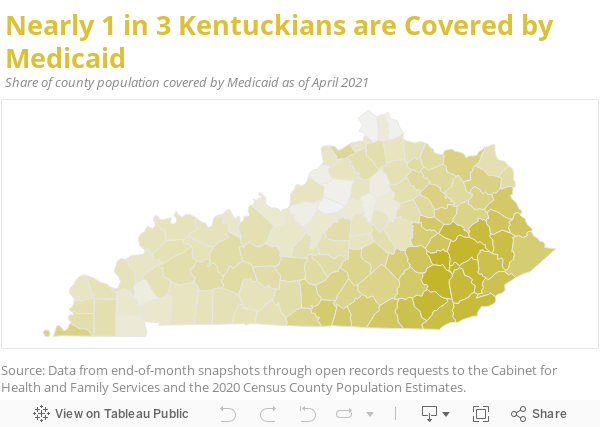
Beshear's father, then-Gov. Steve Beshear, expanded Medicaid in 2014 to people with household incomes up to 138 percent of the federal poverty line. During the pandemic, many people who lost their jobs went on Medicaid, boosting its rolls to 1.64 million, 36.6 percent of Kentuckians. In many Appalachian counties, it covers more than half the population.

Wednesday, June 16, 2021

UK seeks children under 12 to be part of Covid-19 vaccine trial

The University of Kentucky is seeking children from six months through 11 years old to participate in a federally funded clinical trial of the Moderna vaccine against the coronavirus.

UK is one of 90 sites in the U.S. and 10 sites in Canada that are in the trial, which will "define an age-appropriate dose, test the vaccine’s effectiveness, and monitor any potential side effects in children, collecting information to ensure safe use," UK said in a news release.

The trial will enroll 7,050 children nationwide, in three age groups: 6-11, 2-6 and finally those 6 months to 2. UK will enroll up to 200 children to receive either two doses of the vaccine or a placebo, 28 days apart. They will be monitored for up to 14 months via phone calls, telemedicine visits and up to seven visits to the pediatric research clinic at UK HealthCare Turfland.

Participants will be compensated, and the vaccine "may protect young children from getting sick if they come into contact" with the virus, the release said. 

Parents or guardians interested in enrolling their child in the  trial can go to www.StopCOVIDKy.com, where they can answer a confidential pre-screening survey to help determine if a child qualifies and for what phase of the study. "Answering the survey does not obligate you or your child to participate," the release said. "Please note that interest in this study might exceed enrollment capacity, and it could take several weeks for the study team to contact you."

The UK study is led by Dr. George J. Fuchs III, chief of pediatric gastroenterology and vice chair of pediatric clinical affairs at Kentucky Children’s Hospital. “We are privileged for UK to be selected as a site for this important trial,” Fuchs said. “With all other age groups currently eligible for vaccination, it’s vital that we extend this to young children, which is critical to their own protection and to facilitate herd immunity in order to help bring an end to this pandemic.”

Tuesday, June 15, 2021

Ky. averaging more than 15,000 coronavirus vaccine doses per day in last seven days, more than half again as previous week

Vaccinations for the coronavirus continue to increase in Kentucky, according to data from the U.S. Centers for Disease Control and Prevention, as analyzed and displayed by The Washington Post in a chart adapted by Kentucky Health News:

Problems with the vaccination reporting system may mean that the figures for individual days are incorrect, but the weekly totals and averages appear reliable. For the interactive version of the above chart and the CDC's methodology for public reporting of vaccinations, click here. The state Department for Public Health's vaccination dashboard, with county-by-county data, is here.

Firm that has 30 addiction-treatment centers in Kentucky has its largest one on a former college campus near Springfield

Joseph Bentley got his GED degree at Crown Recovery and 
now helps others do it. (Photo by Jonathon Gregg, Spectrum News)
Addiction Recovery Care has been serving patients since on the former campus of the now-defunct Saint Catharine College just west of Springfield, now named Crown Recovery Center, since September.

But that didn't stop it from having a ribbon-cutting Monday, touted by a press release from the Gov. Andy Beshear's office saying "Gov. Beshear to Open New Recovery Center in Springfield."

Beshear said at the event, "What we see here is a chance for people to get better, a chance for them to recover, a chance for them to pull their families together, for kids to get their dads and moms back."

The company operates 30 treatment centers for substance-abuse disorder in 17 Kentucky counties and says Crown is the largest, with a capacity of 750.

Part of Crown's program helps people who haven't completed high school get their General Educational Development degree, in a partnership with Elizabethtown Community College, reports Jonathan Gregg of Spectrum News.

It started with 10 participants, including Joseph Bentley, who is now eight months into recovery and is in the program's fourth and final phase, Gregg reports. “I started to see I could really make difference in my life when I came to this facility here," Bentley told Gregg.