This is default featured slide 1 title

Go to Blogger edit html and find these sentences.Now replace these sentences with your own descriptions.This theme is Bloggerized by Lasantha Bandara - Premiumbloggertemplates.com.

This is default featured slide 2 title

Go to Blogger edit html and find these sentences.Now replace these sentences with your own descriptions.This theme is Bloggerized by Lasantha Bandara - Premiumbloggertemplates.com.

This is default featured slide 3 title

Go to Blogger edit html and find these sentences.Now replace these sentences with your own descriptions.This theme is Bloggerized by Lasantha Bandara - Premiumbloggertemplates.com.

This is default featured slide 4 title

Go to Blogger edit html and find these sentences.Now replace these sentences with your own descriptions.This theme is Bloggerized by Lasantha Bandara - Premiumbloggertemplates.com.

This is default featured slide 5 title

Go to Blogger edit html and find these sentences.Now replace these sentences with your own descriptions.This theme is Bloggerized by Lasantha Bandara - Premiumbloggertemplates.com.

Sunday, March 20, 2022

Senate sends House a bill to create a pilot program for treatment of offenders with mental-health or substance-use disorders

By Melissa Patrick
Kentucky Health News

A bill moving through the state legislature would create a pilot program to divert some qualifying low-level offenders away from jail and into treatment for substance-use disorder or mental-health issues.

State Sen. Whitney Westerfield
While getting his bill through the Senate, Judiciary Committee Chair Whitney Westerfield said he has been working on the problem for several years when he realized, at an unrelated meeting about bail issues, that everyone there recognized the need to address behavioral-health issues among prisoners. 

"The long and short of it is this," he told his colleagues. "Everyone in the room, the most hard-nosed prosecutor, the most soft-hearted defense attorney, every judge at every level, everyone agrees that the vast majority of our prison population could benefit from some sort of behavioral-health intervention."

Westerfield's Senate Bill 90 would create a pilot program in at least 10 counties, determined by the state Supreme Court, that would require a mental-health and substance-use disorder assessment for low-level offenders.

If an offender qualified, the prosecution and the defense attorney must agree for the offender to participate in the new Behavioral Health Conditional Dismissal Program.

Charges against the offender would be deferred, meaning that the prosecution would be "set on the shelf," Westerfield said. Those who successfully complete the program would have their charges dismissed. 

To qualify, offenders can't be charged with a felony higher than Class D (punishable by one to five years in prison), and can't have a previous conviction for a higher felony. Also, those charged with violent offenses or sex offenses, among others, would not be eligible.

In addition to treatment, the program would also offers educational, vocational and recovery-housing supports. It's been said over and over again that getting someone a job is the single most effective thing we can do to prevent offenders from committing another crime, Westerfield said: "If we can keep them from coming back, we've saved us all a bunch of trouble and we've saved a future victim."

With some exceptions, the program must last at least a year and cannot exceed the person's maximum incarceration time unless the defendant agrees in writing to extend the treatment period. 

That's important, said Senate President Robert Stivers, a co-sponsor of the bill, who said he had also been working on the problem for several years.

"Every study you will read will say that a person is less likely to be a recidivist or a relapser once you get beyond a year," he said. "If you get them . . . some type of skills and training and a job, your likelihood of relapsing or recidivism even drops greater than that." 

Stivers added, "I don't know if it goes far enough or too far. But truly, if we're thinking about getting into changing the trajectory of people's lives, getting people back to work, getting them off the welfare rolls, medical assistance, Medicaid, this is an alternative that I believe we should try."

Sen. David Yates, D-Louisville, said the program has the potential to be "transformative to the Commonwealth of Kentucky," because a tough-on-crime approach often does not work for people with mental health or substance-use disorder issues. Yates is a lawyer, as are Westerfield and Stivers. 

"This is just an excellent step in the right direction to get people out of jail, into the workforce, into our economy and stopping this terrible cycle that we hear over and over again," Yates said. 

Sen. Robin Webb, D-Grayson, a lawyer who voted against the bill, asked who would have access to the mental-health evaluation that is taken within 72 hours of intake, often before the offender has a lawyer. 

Westerfield said that would be medical information, so only the medical provider would have access to it unless the offender committed a crime during the assessment. He said he would be willing to adjust the bill in the House to ensure that the commonwealth's attorney does not have access to the assessment. 

SB 90 passed the Senate 27-4. In addition to Webb, Republicans Chris McDaniel of Ryland Heights, John Schickel of Union and Majority Floor Leader Damon Thayer of Georgetown voted against the bill.

The bill has a data-collection component to help determine its effectiveness. The program would begin in October and last four years unless extended or limited by the legislature.

Asked about more money to fight the coronavirus, McConnell says Democrats need to use unspent money from 2021 relief bill

Senate Republican Leader Mitch McConnell said Sunday that Democrats should be willing to "reprogram" some unspent money from their previous pandemic relief bill to get more money to fight the coronavirus.

On CBS's "Face the Nation," McConnell was asked to comment on remarks by President Biden's chief health adviser, Dr. Anthony Fauci, on ABC's "This Week" that Congress needs to appropriate more funds for pandemic work. A partisan dispute kept such funding out of the recent omnibus spending bill.

McConnell said Democrats passed a $2 trillion relief bill last year, "allegedly for Covid . . . on an entirely partisan basis," and "much of that money" has not been spent. He said he is willing to "listen to the evidence" of the need for more money, but said Democrats need to use some of the unspent funds for it.

The Democrats' American Rescue Plan Act, passed about a year ago, gives local communities until 2026 to spend their allocations from it.

Friday, March 18, 2022

Flu cases in Kentucky have ticked up a bit in the last few weeks, and it's not too late to get a flu shot; season can go through May

Kentucky Department for Public Health graph
By Melissa Patrick
Kentucky Health News

Following nine weeks of decline, influenza cases in Kentucky ticked back up.

The state Department of Public Health reports that in the week ended March 12, Kentucky had 170 new confirmed cases of flu, up from 140 the previous week. The week before that, 174 cases were reported, after a month with fewer than 100 cases per week. The state has recorded 3,228 cases this season and one flu-related death.

Dept. for Public Health map, adapted by Ky. Health News; click to enlarge
The health department raised Kentucky's flu level to "widespread" from "regional" because increases in cases were seen in more than half of the state's 16 health regions. Nine showed increases and two showed decreases.

The recent uptick follows a national trend. The Centers for Disease Control and Prevention reports that in the week ending March 12, "influenza activity is increasing in most of the country," with most of the increases seen in central and south-central regions of the nation. 

Flu season usually peaks between December and March, but can run through May." An annual flu vaccine is the best way to protect against flu," says the CDC. "Vaccination can prevent serious outcomes in people who get vaccinated but still get sick."

The flu shot is recommend for everyone ages 6 months and older as long as flu activity continues.

Registration is open for April 14 conference in Bowling Green on youth vaccine that prevents certain types of cancer

Screenshot of flyer; for registration information, click here.

By Melissa Patrick
Ky. Health News

The Kentucky Rural Health Association is devoting a one-day conference to discuss a vaccine that can protect against infections and cancers caused by the human papillomavirus.

The HPV Vaccine Conference will be held at the Knicely Conference Center on Nashville Road in Bowling Green from 8 a.m. to 3 p.m. CST on April 14. Click here for registration. 

The conference agenda has not been released, but a draft agenda says it will include, among other topics, speakers who will talk about strategies to improve HPV immunization rates, rural HPV data, HPV vaccine resources and inter professional collaborations to increase HPV vaccination.

HPV, or human papillomavirus, is the most common sexually transmitted infection in the U.S. and can cause cancers of the cervix, vagina, vulva, penis, anus, rectum, throat and the back of the tongue. More than 90% could be prevented by the vaccine, according to the Centers for Disease Control and Prevention. 

Two doses of the HPV vaccine are recommended for all 11- and 12-year-olds, although the series can be started at age 9. It is also recommended for those 13 to 26 if not vaccinated already. A three-dose schedule is recommended for people who get their first dose on or after their 15th birthday and for people with certain immunocompromised conditions. 

In addition, it is also recommended that anyone between 27 and 45 who is not vaccinated should talk to their health-care provider about their risk of infection and the benefits of getting vaccinated. 

In 2020, only 55.7% of Kentucky teens aged 13 through 17 had received all recommended doses of the HPV vaccine, slightly below the national rate of 58.6%, according to the America's Health Rankings. Kentucky ranks 29th among the states. 

Those rates are even lower in rural Kentucky. Research published in the Journal of Rural Health found that HPV vaccination rates are 11% lower than urban rates. 

America's Health Rankings reports that among Kentucky's 13-to-17-year-olds, 65.5% of the HPV vaccines were given to girls and 46.4% were given to boys.

Tuesday, March 15, 2022

Rand Paul's resolution to end the federal mask mandate in public transit passes Senate, but not by enough to overcome a veto

The federal rule applies to transport hubs and conveyances. (Photo by Brandon Bell, Getty Images)
By Al Cross
Kentucky Health News

The U.S. Senate passed Kentucky Sen. Rand Paul's legislation to end the mask mandate in public transportation, but not by a margin large enough to overcome a threatened veto by President Biden.

Paul's resolution passed 57-40 Tuesday but it takes a two-thirds vote (67 in the Senate) to override a veto, and the Democrat-controlled House could bottle up the resolution, relieving Biden of the burden of vetoing it. The rule had been set to expire Friday, March 18, but the administration extended it to April 18.

Biden's Office of Management and Budget said requiring masks in public conveyances and in transportation hubs had prevented the spread of Covid, "saving lives." It called them "places where people across communities congregate, often for extended periods and in close quarters. The determination of the timeline and circumstances under which masks should be required in these settings should be guided by science, not politics."

Paul, in a press release, called the rule an "anti-science, nanny state requirement" that is ineffective. "As the entire world is learning to live with Covid, the federal government still uses fear mongering to stubbornly perpetuate its mandates, rather than giving clear-eyed, rational advice on how to best protect yourself from illness."

The rule was issued by the Centers for Disease Control and Prevention in January 2021. On Feb. 25, 2022, it exempted school buses, in conjunction with relaxed guidance for mask wearing in schools. "Travel contributes to interstate and international spread of Covid-19," the CDC says. "Wearing masks that completely cover the mouth and nose reduces the spread of Covid-19."

Tuesday's vote was largely along party lines. Minority Leader Mitch McConnell of Kentucky and all other Republicans except Mitt Romney of Utah voted for the resolution, as did Democrats Mark Kelly and Krysten Sinema of Arizona, Michael Bennet of Colorado, Jon Tester of Montana, Jacky Rosen of Nevada, Maggie Hassan of New Hampshire and Joe Manchin of West Virginia.

Monday, March 14, 2022

As most Covid-19 numbers in Kentucky continue to fall, Beshear 'pauses' weekly pandemic press conferences for second time

Ky. Dept. for Public Health graph, adapted by Ky. Health News; for a larger version, click on it.

By Melissa Patrick

Kentucky Health News

With almost every metric to measure the pandemic in Kentucky keeping on a steady decline, Gov. Andy Beshear announced that he was putting his weekly Covid-19 press conferences on a "pause." 

"While we still have some struggles, while this pandemic is still with us, things continue to move in the right direction and they are continuing to move at a regular pace," Beshear said. "That means cases, positivity rates [are] all declining, as well as hospitalizations, those in the ICU and those on ventilators. Every metric is moving the right direction."

Beshear stopped regular pandemic briefings last June, but resumed them after the highly contagious Omicron variant arrived. It caused the biggest surge of the pandemic.

"If I can go back in time and change a decision or a way to talk about things," Beshear said, "I really would have talked about how this was going to be a war. None of us have lived through this before so we didn't know. But I would have talked about how you don't win a war in two weeks. That a war may take two years and that's what it's been. And this war will end when we beat the virus or it becomes fully endemic," like influenza and cold viruses.

"We know so much more about the virus and how to fight it. In many ways, it has become a part of our daily lives,” he said. “If today is the last update we give, living with Covid is not ignoring Covid. It is having the information to be empowered to make the right decisions to protect ourselves.”

Beshear pointed to the largely green and yellow Centers for Disease Control and Prevention map, updated last Thursday and Friday, that uses new coronavirus cases and Covid-19 hospitalizations and intensive-care cases to determine the risk that the virus poses in each U.S. county. 
 
The map shows 32 Kentucky counties are red, signifying a high risk of infection and hospitalization, which the CDC says calls for wearing masks in indoor public spaces; 38 are yellow, signifying a medium risk; and 51 are green, indicating a low risk.

"This map is just one way to show how we are moving to a better place," Beshear said, adding that he expects to see many more yellow and green counties in Kentucky next week.

The bad news is that Kentucky's Covid-19 deaths, the pandemic's lagging indicator, keep rising. The state attributed 283 more deaths to Covid-19 in the reporting week ended Sunday, up from 275 the previous week. Beshear said 13 of the deaths were of people under 49, and one was 25. Kentucky's pandemic death toll is now 14,380. 

The governor encouraged Kentuckians to  pray for families of Covid-19 victims, and encouraged them to get vaccinated to prevent more deaths. He said that even with more vaccinations given in the last week, this is the only metric going in the wrong direction.

Actually, Kentucky's vaccination rate more than doubled in the last 10 days. The state averaged 3,662 doses per day last week, more than twice what the average was 10 days ago, when it bottomed out at 1,772 per day, according to CDC data presented by The Washington Post

Beshear noted that some people continue to get their first dose. Of the 25,000-plus vaccinations last week, 6,459 were first shots, 8,045 were the second shot; and 10,809 were boosters. 

Kentucky's Covid-19 vaccination rates remain below national averages, with 65% of the state's population having received at least one dose of a vaccine, 56% "fully vaccinated" and 43% of that eligible population with a booster shot.

The percentage of Kentuckians testing positive for the coronavirus in the past seven days is now 4.17%, the lowest this rate has been since July 2021. 

In the week ended March 13, Kentucky reported 9,532 new coronavirus cases, down from 12,010 the week before. It was the seventh straight week this number has fallen. 

Kentucky's new-case rate has finally dropped out of the leaders in the The New York Times rankings; it is now 20th among the states. It had a 78% decline in the last 14 days, the second fastest decline among states. 

However, the state still has many hot spots. The Times reports that Pike County has the highest rate of any county in the nation, with 175 cases per 100,000; the Nome Census Area in Alaska is first among counties and county equivalents, at 239/100K.

Many Kentucky counties are in top 50: Trigg, McCreary, Perry (6th, 7th and 8th); Wayne, Morgan, Taylor (12,13,14); Bath (21), Clinton (24), Pulaski, Adair, Green (28,29,30); Whitley (36), Breathitt (39), Montgomery (42) and Caldwell (48).

Kentucky hospitals reported 470 Covid-19 patients on Monday, with 95 in intensive care and 56 on mechanical ventilation. The Times ranks Kentucky's hospitalization rate fifth in the nation, even though that rate has dropped 49% in the last 14 days.

Sunday, March 13, 2022

House passes bill to allow APRNs to prescribe controlled substances after a four-year collaborative agreement with doctor

American Association of Nurse Practitioners map, adapted by Kentucky Health News
By Melissa Patrick
Kentucky Health News

A bill to create a path for Kentucky's advanced practice registered nurses to prescribe controlled substances independently has passed the state House with only eight members voting against it. 

“We are always talking about encouraging folks to enter the health-care field; we hear discussion about a shortage of nurses that we have,” Rep. Russell Webber said while presenting the bill on the House floor. “This bill will help with that.”

House Bill 354, sponsored by Webber, would allow an APRN to prescribe controlled substances without a collaborative agreement with a physician, after practicing under such an agreement for four years and getting approval from the Kentucky Board of Nursing.

If the board decides an APRN is abusing this authority, it can require them to go back under a collaborative agreement, or it can take further action.

The latest version of the bill would hold independently prescribing APRNs to the same standard of care as other prescribers, and create a Controlled Substance Prescribing Review Panel to monitor them.

"This component adds teeth to this bill. It adds strength," said Webber, a Shepherdsville Republican. "It  may very well help us get to the bottom of some problems that are existing out there, if they are existing, but the data will certainly be worthwhile for us to have. Problems that may surface will be worthwhile for us to know."
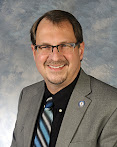
Rep. Russell Webber

Webber was alluding to the implicit contention of the doctors' lobby, the Kentucky Medical Association, that APRNs haven't been responsible enough with their prescribing of Schedule II drugs, those with high potential for abuse, to prescribe them independently.

In Kentucky, APRNs have been able to prescribe controlled substances since 2006 under a "collaborative agreement for prescriptive authority-controlled substances," or CAPA-CS. They are allowed to prescribe a 72-hour supply of a Schedule II drug; HB 354 wouldn't change that.

The bill's primary co-sponsor, Rep. Patti Minter, a Democrat from Bowling Green, told the House that it is needed to increase health-care access in a state that has only 57 percent of the primary-care practitioners it needs and 25% of needed mental-health personnel. 

"Nurse practitioners are for many people the primary-care providers," Minter said. "They're the family doctors of the community."

Rep. Jerry Miller, R-Eastwood, said the bill would improve access to health care. "This is a good bill for the people," he said. "It may not be a good bill for the doctors, but it's a good bill for the people of Kentucky." 

House health committee Chair Kim Moser, R-Taylor Mill, a former nurse and a doctor's wife, voted no. Moser said she liked the amendments because "It's critical that all prescribers play by the same rules" but cautioned, "The only thing that we are doing by passing this bill is increasing controlled substances."

The House voted against suspending its rules to let Moser offer a floor amendment to reinstate the requirement that an APRN be licensed to practice for a year before being prescribing controlled substances, to obtain a registration certificate from the Drug Enforcement Administration and pass each component of the federal licensing exam in three attempts, just as physicians must do before prescribing controlled substances. 

Rep. Mary Lou Marzian, D-Louisville, a nurse, said the bill is needed because APRNs need a DEA number to order some diabetic and psychiatric medication, durable medical equipment, and flu and antibiotic shots.

APRNs were allowed to prescribe controlled substances without a collaborative agreement in the pandemic through an executive order that the General Assembly approved, but that ended in January when lawmakers extended the state of emergency but did not extend the APRNs' expanded authority.

Dueling numbers

A before-and-after comparison by the Kentucky Association of Nurse Practitioners & Nurse-Midwives, said there were "no significant differences in the average number of opioid prescriptions by APRNs without the CAPA-CS in place" before the emergency order was implemented and the six quarters it was in place. Similar findings were also noted for dentists and physicians. 

The data came from the state's Kentucky All Schedule Prescription Electronic Reporting system. Other KASPER data provided by the APRN association shows that the average number of Schedule II prescriptions per APRN prescriber dropped 34.9% between 2015 and 2021. 

Webber said, "Nurse practitioners were not writing prescriptions hand over fist for controlled substances and flooding the state with opioids." 

The KMA disputed those figures before the House Licensing, Occupations and Administrative Regulations Committee on March 9.

Cory Meadows, KMA's deputy executive vice president and director of advocacy, said "We have KASPER numbers that show that they are consistently up, way up over the course of a lot of years."

KASPER data provided by the KMA, comparing the total number of prescriptions for Schedule II opioids prescribed by APRNs shows an increase in all but one year since since 2011, the year before lawmakers passed what is called the "pill-mill bill" that placed restrictions on opioid prescribing.

There are some discrepancies, many of them slight, in the year-to-year numbers provided to Kentucky Health News by the two organizations, and they measure different things. 

For example, the APRN group provided the average number of Schedule II opioid prescriptions per the number of prescribers since 2015 and for seven recent quarters, while the KMA provided year-to-year percentage changes for the total number of such prescriptions. 

KMA data shows that Schedule II opioid prescribing by APRNs went up 8.2% between 2020 and 2021, years that the CAPA-CS were no longer required, under the executive order.

The APRN data shows that the average number of Schedule II opioid prescriptions per APRN dropped from 100.68 in 2020 to 99.28 in 2021 and that their quarterly average in 2021 was 25 prescriptions. The average was 50 for physicians and 22 for dentists.

The bill passed the House 84-8 and moves to the Senate, where it will be carried by Sen. Julie Raque Adams, R-Louisville. 

The "no" votes were all Republican: Moser, Joe Fischer of Fort Thomas, Kim King of Harrodsburg, Mathew Koch of Paris, Adam Koenig of Erlanger, Sal Santoro of Union, Nancy Tate of Brandenburg and Killian Timoney of Lexington.