This is default featured slide 1 title

Go to Blogger edit html and find these sentences.Now replace these sentences with your own descriptions.This theme is Bloggerized by Lasantha Bandara - Premiumbloggertemplates.com.

This is default featured slide 2 title

Go to Blogger edit html and find these sentences.Now replace these sentences with your own descriptions.This theme is Bloggerized by Lasantha Bandara - Premiumbloggertemplates.com.

This is default featured slide 3 title

Go to Blogger edit html and find these sentences.Now replace these sentences with your own descriptions.This theme is Bloggerized by Lasantha Bandara - Premiumbloggertemplates.com.

This is default featured slide 4 title

Go to Blogger edit html and find these sentences.Now replace these sentences with your own descriptions.This theme is Bloggerized by Lasantha Bandara - Premiumbloggertemplates.com.

This is default featured slide 5 title

Go to Blogger edit html and find these sentences.Now replace these sentences with your own descriptions.This theme is Bloggerized by Lasantha Bandara - Premiumbloggertemplates.com.

Monday, June 6, 2022

CHI Saint Joseph Health Foundations to hold online auction to benefit cancer patients and their families June 9-18

A virtual silent auction to raise funds for cancer patients and their families will be held from 6 p.m. Thursday, June 9, through 9:30 p.m. Saturday, June 18, by the CHI Saint Joseph Health Foundations. The “Evening of Hope” offers 180 items valued at more than $65,000, a news release said.

On the evening of June 18, "Kentuckians across the state will host dinner-party fundraisers, a mission moment and inspiring stories of hope," the release said. "In 2021, the event raised more than $360,000."

Items include weeklong vacations in the South of France, St. Pete Beach in Florida and Cabo San Lucas in Mexico; 2022-23 season tickets for Kentucky men’s basketball; a 50-inch TV set; distillery and farm tours; a box at Keeneland’s 2022 fall meet; wine and bourbon baskets, a handmade sterling-silver and 14-karat yellow gold bracelet set. To bid on silent auction items, scan the QR code or click this link to register.

To bid on the silent auction, visit EOH2022.ggo.bid.

For more information about Evening of Hope and ways to get involved, visit www.chisaintjosephhealth.org/chi-saint-joseph-health/ways-to-help/eveningofhope.

Sunday, June 5, 2022

As FDA moves to ban menthol cigarettes, Enquirer reveals how cigarette makers targeted Blacks in Cincinnati area and Knoxville

Cigarette makers targeted African Americans in Cincinnati and Knoxville as they pushed menthol brands 50 years ago, The Cincinnati Enquirer revealed Sunday in a story prompted by the Food and Drug Administration's move last month to ban menthol cigarettes, the choice of most Black smokers.

The phenomenon began "after a threat of regulation from the federal government caused tobacco companies to pull out aggressive youth-oriented marketing campaigns," the Enquirer's Brooks Sutherland reports. "The companies shifted to focus to another population. The new targets would become impoverished young Black males in urban cities."

R.J. Reynolds Tobacco Co., which now has the bestselling menthol cigarette brand, Newport, targeted cities with new marketing and advertising approaches, including a new brand called Mr. Menthol "to compete with Kool, the dominant brand of menthol cigarettes at the time," Sutherland reports. The test markets were Cincinnati and Knoxville.

Kool, then owned by Louisville's now-defunct Brown & Williamson Tobacco Co., "began to focus on popular culture, particularly music, for its advertising," Sutherland reports. In 1975, it started the Kool Jazz Festival in Cincinnati and 11 other cities, with "iconic artists such as the O’Jays, the Isley Brothers (Lincoln Heights’ own), Harold Melvin, the Ohio Players and B.B. King in its first year."

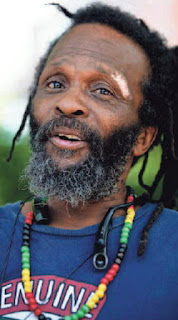
Don Williams (Photo by Mark
Cesare, The Cincinnati Enquirer)
“I went down there and got me a couple packs; I started out smoking Kools,” Don Williams of Maysville told Sutherland. “They had the brand everywhere. They were giving out packs of cigarettes. People would come in, they’d give them a pack and if you don’t smoke, then you don’t take it.”

Williams added, “It got a lot of Black people to smoke.” The festival became the Cincinnati Music Festival in 1986.

Dr. O’dell Owens, interim Cincinnati health commissioner and former Hamilton County coroner, recalled "how smoking was much more than a habit to young Black males, particularly because of advertising and the coordination between tobacco companies and popular culture," Sutherland writes, quoting him: “When the guys would light up their cigarettes, it wasn’t just lighting a cigarette, it was how you did it,” he said. “You had to light your cigarette with style. . . . It was an event to light a cigarette, and so people said ‘Man, that’s cool.’ And young kids wanted to smoke.”

The FDA banned flavors in cigarettes in 2009, except menthols; their heavy use by Blacks has made such a move politically fraught. But the FDA's move "has been praised by the National Association for the Advancement of Colored People," Sutherland notes. "According to an Interact for Health adult smoking survey, around 68% of Black smokers in the Cincinnati region smoke menthol cigarettes."

Mothers on WIC program who need formula should call health department; others should call pediatrician, health secretary says

Photo from nbcnews.com
By Melissa Patrick
Kentucky Health News

As Kentucky families struggle to find baby formula for their infants and no immediate end in sight, Kentucky lawmakers discussed ways to improve the situation at the June 2 meeting of the Interim Joint Committee on Health, Welfare and Family Services. 

The shortage is largely the result of a U.S. Food and Drug Administration investigation of Abbott Nutrition's Michigan factory that resulted in it shutting down in February. The investigation was prompted by four bacterial infections in infants who had consumed formula from the company's Michigan plant. Abbot makes up to 40% of the formula market in the United States.  

Abbott announced Saturday that it had resumed production at the factory after meeting initial requirements agreed to with the FDA as part of a consent decree the company entered into on May 16. 

But that doesn't mean an immediate end to the shortage. Abbott says its priority is production of EleCare, a special formula for children with multiple allergies, before it ramps up production of its other products. The initial EleCare product is expected to be released "on or about June 20," Abbott's release said. 

Last week, FDA Administrator Robert Califf  told lawmakers that the baby formula shortage in the U.S. will likely not be resolved until late July. 

On June 2, Datasembly, a retail data firm, reported that the nationwide out-of-stock rate for formula in the week ending May 28 was 74%, up from 70% the week before and 45% the week before, according to Bloomberg. Kentucky's latest out-of-stock rate is 76.7%, a slight increase from 75% the week before. 

President Joe Biden has done several things to increase access to formula, including invoking the Defense Production Act to mandate increased production and importing formula manufactured overseas. 

Legislators and Beshear

The day before the health committee meeting, Rep. Kim Moser, R-Taylor Mill, a co-chair, published an opinion article that urged Democratic Gov. Andy Beshear to issue a plan for how to deal with the shortage, saying "We have heard nothing from Gov. Beshear on what families are to do." 

Moser took several jabs at Beshear's handling of the shortage and said he should issue executive orders to increase the production of formula and address price gouging, as governors in other states have done. 

"I am calling on him to make a statement and do what he can to address this shortage because Kentucky families struggle every day to find the necessary supplies for their children," Moser wrote.

At the committee meeting, Eric Friedlander, secretary of the Cabinet for Health and Family Services, said there are already anti-price gouging statutes on the books that should continue to be enforced. 

Moser said the state attorney general's office told her that any anti-price gouging policies specific to formula need to be tailored specifically to this food product. "I think it's worth looking into, just to provide some protections," she said. 

She also noted that Agriculture Commissioner Ryan Quarles (whom she is supporting for governor) is calling for donations of formula through his Kentucky Hunger Initiative. 

Beshear answered several questions on the topic at his regular weekly news conference, in Frankfort just after the committee meeting in Northern Kentucky. "It's certainly something that I'm concerned about," he said, adding that the FDA should have seen the ramifications of shutting down the Abbott plant. 

"I'm going to push to ensure that every time the FDA makes one of these decisions, and I get they're making it in terms of immediate health, but they need to be providing a long-term analysis of the ramifications, how this impacts our economy, and different supply chains so in the very least, the president, governors, Congress is made immediately aware of what could happen," Beshear said. 

Beshear was not asked about price gouging or ways to increase formula production or price gouging, He encouraged people on Special Supplemental Nutrition Program for Women, Infants and Children, or WIC, to call their local health department or their community WIC agency and all others to reach out to their pediatrician. 

Friedlander did likewise at the committee meeting, adding that those who are not part of the WIC program should reach out to their pediatrician.

He said the state is looking at ways to take back formula from families who have excess supplies and redistribute it, but the rules governing that are pretty stringent. He also encouraged families to check out online resources to locate formula such as the U.S. Department of Health and Human Services website at hhs.gov/formula.

Health departments, WIC and retailers

Kentucky has taken advantage of federal waivers that allow the WIC program to cover more types and sizes of formula since February. Click here to see the list of approved formulas available to WIC participants.

"We're doing pretty much everything we can to try to help families find the formula they need," Cathy Winston, nutrition manager at the Northern Kentucky Health Department, told the committee. "And it's been a real challenge." 

Moser commended the department for its efforts, but suggested more needs to be done for families not on WIC, by providing information to them about what substitutes are acceptable if they can't find the baby formula they normally use. "We have some desperate families out there," she said.

Shannon Stiglitz, a lobbyist for the Kentucky Retail Federation, walked the legislators through challenges that retailers face in the formula shortage, including supply-chain issues that started during the pandemic, the need to limit on purchases to minimize panic buying, and efforts to minimize theft. 

Stiglitz said four baby-formula manufacturers in the country is "too few," and said Abbott has contracts with 30 of the 31 states that use a single provider, exacerbating the shortage for WIC families.  

Breastfeeding as an option

Sen. Ralph Alvarado, R-Winchester, encouraged new and expectant mothers to consider breastfeeding and consult their doctors about it. 

"You won't have to worry about any of this., and you can provide your child with the nutrition that it needs, probably the best nutrition that your baby could have," said Alvarado, a physician. "So I would encourage moms to think about that. That's really the the answer for this moving forward."

Some new mothers don't want to breastfeed, or have to rely on formula for several reasons; they may have an illness, incompatibility with work schedules, or issues with lactation or their baby's latching to a breast.

Thursday, June 2, 2022

CDC: Covid-19 risk levels high in 7 Ky. counties, medium in 21; Beshear says 'This is the safest we have been in this pandemic'

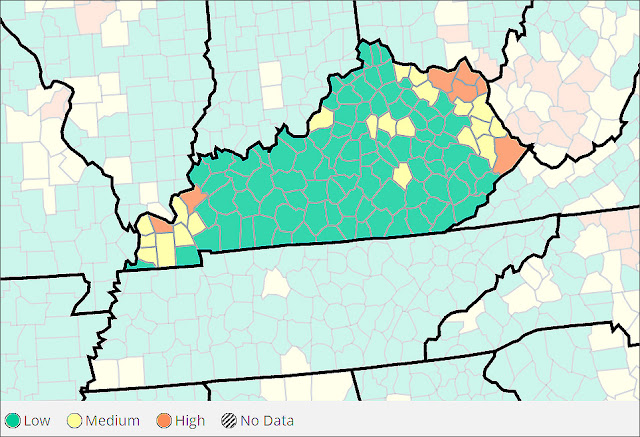
Centers for Disease Control and Prevention map shows estimated risk from Covid-19.
By Melissa Patrick
Kentucky Health News

Seven Kentucky counties are red on the latest Centers for Disease Control and Prevention national Covid-19 risk map, indicating a high level of coronavirus transmission. Twenty-one Kentucky counties are yellow, indicating a medium level of transmission.

The red counties are McCracken and Crittenden in Western Kentucky and Pike, Lewis, Greenup, Carter and Boyd in the northeast. McCracken has been red for three weeks in a row, although officials there have questioned its status. Boyd and and Greenup counties were also red last week. 

In red counties, state guidelines call for wearing masks in indoor public spaces, limiting in-person gatherings, limiting the size of gatherings, and social distancing.

Last week's map had only four red counties, but this week's map looked much the same as last week's, with yellow in West Kentucky, Louisville, the Lexington area and the state's northeastern tier.

Gov. Andy Beshear referred to last week's map at a news conference Thursday, a few hours before the release of the new one, as he encouraged Kentuckians to pay attention to the map, especially if they live in red counties, because it not only looks at Covid-19 cases but also hospital capacity. 

"It's kind of a deeper analysis, or at least one that brings multiple different things together. So we ought to continue watching this map, and listen, it means there's more Covid than there was a month ago," he said. He added later, "I think in red counties, certainly some thought should be given on individual decisions on masking." 

The 21 yellow counties are Hickman, Carlisle, Ballard, Graves, Marshall, Lyon, Livingston, Jefferson, Woodford, Fayette, Clark, Rockcastle, Bracken, Mason, Fleming, Elliott, Lawrence, Johnson, Magoffin, Floyd, and Martin. 

The CDC says people in yellow counties who are immunocompromised, or at high risk for severe illness from the virus, should talk to a health-care provider about whether they need to wear a mask or take other precautions.

Again this week, the cluster of yellow and red counties in Eastern Kentucky border a large cluster of red and yellow counties in West Virginia. 

This week's CDC risk map comes with what Beshear called a "mixed bag" of  Covid-19 metrics in Kentucky, with cases and hospital numbers down, but the share of Kentuckians testing positive for the virus up. 

"Here's the really good news," he said. " While we have more cases than we had a month ago, and while the positivity rate continues to go up, it is not proportional anymore to significant illness amongst people who get it." 

The state's weekly report Monday showed Kentucky had an average of 1,020 new cases a day last week, down 12% from the week before, the lowest weekly Covid-19 death rate since August 2021 and low hospitalization numbers. The positive-test rate increased to 11.2% from 10.5% the week before. 

Asked if he was satisfied with the way Kentuckians were approaching the pandemic right now, Beshear said, "I'm not sure I will ever be fully satisfied until we are past the pandemic." 

He then noted that Kentuckians are likely following a "natural path" of behavior as the state moves toward the endemic phase of the pandemic, meaning that the virus will have stopped being widespread, but remain present, with outbreaks limited to particular regions. 

"This is the safest we have been in this pandemic, since it hit," he said. 

Beshear acknowledged the disruption that Covid-19 cases and quarantines have on businesses and events, commending people who stay home when they test positive or have been exposed to the virus because that is what is needed to slow the spread of the virus. 

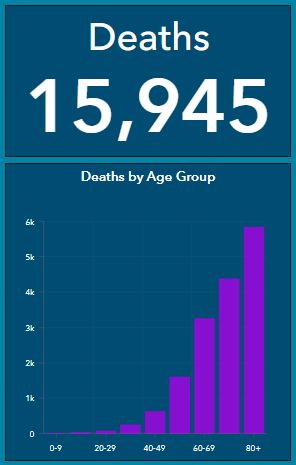
State Dept. for Public Health graph
The governor again encouraged Kentuckians to get fully vaccinated and boosted, and to use the reported Covid-19 metrics and the CDC map to make the best decisions for their health and safety. That's especially important for seniors, who, despite strong levels of vaccination, have been killed at "vastly higher rates" during this winter's Omicron surge than in the last year, Benjamin Mueller and Eleanor Lutz report for The New York Times: "Almost as many Americans 65 and older died in four months of the Omicron surge as did in six months of the Delta wave, even though the Delta variant, for any one person, tended to cause more severe illness." 

Kentucky's Covid-19 dashboard doesn't show deaths by age for each month of the pandemic, but it clearly shows that seniors have been hit hardest by the virus. 

The dashboard also shows that among Kentucky seniors 60 and older who have died from the virus, 4,246 of them were unvaccinated and 1,987 of them were fully vaccinated.

Wednesday, June 1, 2022

Early data shows ODs rose 13.55% in Ky. in 2021, much less than in 2020; ODs among Black Kentuckians jumped 117% in 2016-20

By Melissa Patrick
Kentucky Health News

Drug-overdose deaths in Kentucky rose 13.55% in 2021, according to a recent federal report. 

The preliminary data from the Centers for Disease Control and Prevention shows Kentucky had 2,391 overdose deaths in 2021, up from 2,104 in 2020. 

After having the second highest rate of increase among the states in last year's preliminary report, 54%, 2021's much lower increase puts Kentucky near the midpoint of the rankings, at 22nd lowest and below the national estimated increase of 14.9%.

An interactive CDC graphic shows the number of overdose deaths in the previous 12 months for each month of the year. In Kentucky, drug-overdose deaths saw a big increase when the pandemic began in March 2020. While the number of estimated overdose deaths remains higher than before the pandemic, they are not increasing at the same trajectory.

Nationwide, more than 107,000 overdose deaths were reported in 2020, up from more than 93,000 estimated in 2020.  

Graph shows overdose deaths by drug or class of drug in Kentucky since 2018; click it to enlarge.
The report also includes data about drug-overdose deaths by drug or class of drugs. In Kentucky, it shows that opioids and synthetic opioids, such as fentanyl, were the two main contributors for overdose deaths in 2021, with opioids involved in 1,906 of the deaths and synthetic opioids in 1,728 of them. 
Like the rest of the nation, the new data show overdose deaths involving opioids and synthetic opoids increased between 2020 and 2021. 

Overdoses jump among Kentucky Blacks

A separate analysis done by the University of Kentucky found that the rate of drug-overdose deaths among African Americans in Kentucky more than doubled from 2016 and 2020.  

The Black overdose-mortality rate increased nearly 117% — from 21.2 deaths for every 100,000 people in 2016 to 46 per 100,000 in 2020, according to the report. 

The study, published in the journal Public Health Reports, shows that about 80% of drug-overdose deaths among all racial and ethnic groups in Kentucky involved opioids.

“Historically, opioid-overdose death rates have been disproportionately higher among white individuals, but the new study shows that the rates for both white and Black individuals in Kentucky are now nearly the same,” Svetla Slavova, study co-author and associate professor in the UK College of Public Health, said in a news release. “This reflects national data, which show that disparities in opioid overdose deaths continue to worsen for Black people.”

Slavova is part of UK's HEALing Communities Study research team that conducted the study and a faculty member in the Kentucky Injury Prevention and Research Center.

The researchers conclude that their findings "underscore the urgent need to expand treatment and harm reduction services to non-Hispanic Black residents with substance-use disorder." 

“Black Kentuckians who are at risk for drug overdose may face additional barriers to accessing treatment,” Sharon Walsh, principal investigator for the study and director of UK’s Center on Drug and Alcohol Research, said in the release. “This study underscores the importance of our efforts to expand treatment and harm reduction services in Kentucky’s communities of color.”

One of the study's goals is to create culturally tailored interventions and partnerships with community organizations to better engage people in communities of color with evidence-based practices to reduce opioid overdose, including increasing access to and treatment with approved medications for opioid-use disorder, such as buprenorphine and methadone. It also includes education about overdoses and distribution of naloxone, a life-saving medication that rapidly reverses an opioid overdose. 
People who are struggling with drug abuse or who are concerned about a family member's substance use can search for treatment providers at www.findhelpnowky.org.

Will Farish gives UK $5 million for urologic cancer program

Noted horseman Will Farish has given the University of Kentucky $5 million to create a program in urologic cancer at UK's Markey Cancer Center.

The Ambassador William Stamps Farish Program of Excellence in Urologic Cancer will have a named space in the Markey center's new building, scheduled to open in 2025. Farish, 83, is a former oilman who was ambassador to the United Kingdom under President George W. Bush and was a close friend of President George H.W. Bush, running his blind trust from an office in Versailles. He owns Lane's End Farm in Woodford County.

William S. Farish III
Farish said in a news release, "The burden of cancer in Kentucky is immense, and we have watched and been inspired by the Markey Cancer Center’s capacity to provide advanced care to so many people in the commonwealth. We want to give Kentuckians their best chance at a long and healthy life, and this gift will provide more resources for patients, including more providers and improved access to the latest early phase clinical trials, as close to home as possible.”

The money is being given from the William Stamps Farish Fund through the Markey Cancer Foundation. The fund has previously supported recruitment of physicians and researchers to UK's Department of Urology and its giving to UK totals $9.3 million.

Dr. Stephen Strup, chair of the department, said in a news release, “I want to thank the Farish family for their continued, generous support to our program over the years. With this new funding, we’ll focus on recruiting more faculty and supporting new research into the prevention and treatment of these cancers.”

Dr. Mark Evers, director of the Markey center, said “This funding will specifically help us address an all-too-common problem in our state – our high rates of prostate, kidney and bladder cancer.”

Kentucky has high rates of cancer and death from it. Urologic cancers, also known as genitourinary cancers, are three of the top 10 most commonly diagnosed cancers in the state: prostate (#3), kidney (#6) and bladder (#7). The American Cancer Society estimates there will be an estimated 6,470 new diagnoses of these cancers in the state this year.

"Kentucky’s high rates of urologic cancers are correlated with socioeconomic factors including obesity and tobacco use," the release said.

It said the Markey center serves half the cancer patients in Kentucky and is a regional destination for patients with more complex conditions. Since it became the state’s only National Cancer Institute-designated center in 2013, it has seen its patient volume double. The designation helps it conduct early clinical trials that are not widely available elsewhere, including more than a dozen trials for urologic cancers.

Nominations are sought by Aug. 31 for Dan Martin Award recognizing lifetime contributions to rural health in Kentucky


Since 2003, the Kentucky Rural Health Association has presented an individual with an award for lifetime contributions to rural health in Kentucky. The award is named for its first recipient, Dr. Dan Martin of the Trover Foundation in Madisonville. 

The Dan Martin Award is given to someone who has provided many years of service to rural health, whether in patient care, administration, health-professions education, health administration, health promotion or public advocacy.

The rural heath association is seeking nominations for this year's award. To nominate someone, complete this form. The deadline for nominations is  Wednesday, Aug. 31. 

KRHA members who would like to serve on the Dan Martin Award Committee should email Garrett Anspach at gban222@uky.edu. The committee ranks the candidates using established criteria and makes a recommendation to the  KRHA Executive Committee, which selects the honoree, if one is deemed appropriate.  The award will be presented at the KRHA Annual Conference Nov. 16-17 at the Center for Rural Development in Somerset.

"There are many dedicated, compassionate people at work in rural health in Kentucky and we look forward to being able to give them some well-deserved recognition," the KRHA said in a news release. "Now is your chance to help us thank someone that you think deserves recognition. We need and appreciate your input."