This is default featured slide 1 title

Go to Blogger edit html and find these sentences.Now replace these sentences with your own descriptions.This theme is Bloggerized by Lasantha Bandara - Premiumbloggertemplates.com.

This is default featured slide 2 title

Go to Blogger edit html and find these sentences.Now replace these sentences with your own descriptions.This theme is Bloggerized by Lasantha Bandara - Premiumbloggertemplates.com.

This is default featured slide 3 title

Go to Blogger edit html and find these sentences.Now replace these sentences with your own descriptions.This theme is Bloggerized by Lasantha Bandara - Premiumbloggertemplates.com.

This is default featured slide 4 title

Go to Blogger edit html and find these sentences.Now replace these sentences with your own descriptions.This theme is Bloggerized by Lasantha Bandara - Premiumbloggertemplates.com.

This is default featured slide 5 title

Go to Blogger edit html and find these sentences.Now replace these sentences with your own descriptions.This theme is Bloggerized by Lasantha Bandara - Premiumbloggertemplates.com.

Tuesday, December 27, 2022

As he leaves public office, Dr. Anthony Fauci says the biggest change in public health has been the normalization of falsehoods

Dr. Anthony Fauci (Associated Press photo by Alex Brandon)
As Dr. Anthony Fauci retires after five decades in public health, he says he worries that lies and misinformation are creating a "profoundly dangerous" time for science and the public.

"Untruths abound and we almost normalize untruths," Fauci told The Associated Press. "I worry about my own field of health, but I also worry about the country."

Fauci has made the same point in several other exit interviews. In August, he said on MSNBC, "There's no much lying going on over there that people accept it as part of the norm," and when lots of people accept it as truithful, "that is the beginning, I believe, of the destruction of our democracy."

In December, he told ABC News, "Misinformation and disinformation is really hurting so many things, including people's trust in science. It becomes very difficult to get people to fully appreciate the truth of what's going on — which will ultimately impact how we respond, in this case, to a pandemic, like Covid-19."

AP notes, "Fauci, who turned 82 on Christmas Eve, has been a physician-scientist at the National Institute of Allergy and Infectious Diseases for 54 years, and its director for 38 of them. Because he candidly puts complex science into plain English, Fauci has advised seven presidents, from Ronald Reagan to Joe Biden, about a long list of outbreaks -- HIV, Ebola, Zika, bird flu, pandemic flu, even the 2001 anthrax attacks."

Fauci said his policy has been to "stick with the science and never be afraid to tell somebody something that is the truth -- but it's an inconvenient truth in which there might be the possibility of the messenger getting shot/ You don't worry about that. You just keep telling the truth. That's served me really quite well with one exception that, you know, the truth generated a lot of hostility towards me in one administration."

AP sums up: "As the world enters another year of Covid-19, Fauci still is a frequent target of the far right -- but also remains a trusted voice for millions of Americans. . . . The public did struggle to understand why some of his and others' health advice changed as the pandemic wore on, such as why masks first were deemed unnecessary and later mandated in certain places. Fauci said one of the pandemic's lessons is to better convey that it's normal for messages to change as scientists make new discoveries.

"That doesn't mean you're flip-flopping," he said. "That means you're actually following the science."

Sunday, December 25, 2022

Poll of rural Americans finds them more aware of, and more willing to discuss, opioid problems; 47% still see stigma

Morning Consult graph: 2017 and 2022 responses to question about access to care. Click to enlarge.
Rural Americans say they are more aware of, and more willing to talk about, the opioid problem in the nation and their communities than they were five years ago, according to an online poll of rural adults sponsored by the American Farm Bureau Federation and the National Farmers Union.Sixty percent said adults are more aware of the crisis than they were five years ago, and 77% said they would comfortable having a conversation about opioids, but 47% said there is stigma or shame associated with opioid abuse in their community.

Rural adults increasingly regard drug addiction as a disease. Asked if addiction to opioids is a disease or is due to a lack of will power or self-control, 57% said it's a disease and 21% said otherwise. In 2017, the numbers were 46% and 26%, respectively. Likewise, 78% said someone can accidentally or unintentionally get addicted to opioids; five years ago, 71% said that.

The poll found that more rural adults than five years ago believe there is a higher rate of opioid misuse in rural communities than in urban and suburban areas), and 48% said they know someone who is or has been addicted to opioids or prescription painkillers.

Asked if they had taken an opioid or prescription painkiller without a prescription, 5 percent said yes. The same percentage said they had abused opioids or prescription painkillers or been addicted to them. Asked how comfortable they would feel talking about that, 70% said they would feel very or somewhat comfortable discussing it with friends, 52% with siblings and 46% with parents. Beyond their immediate families, most said they would be not too comfortable, or not comfortable at all.

The margin of error for that subsample of 110 people is plus or minus 9.3 percentage points. The error margin for the whole sample of 2,010 rural adults is 2.2 percentage points. The poll was conducted online Oct. 6-13 by Morning Consult and the results were weighted to reflect gender, age, race, ethnicity, census region and education. The results are available from Farm Bureau here.

Farm Bureau and NFU, long rivals in representing farm interests, "have consistently worked to publicize and compile useful material to help address rural stress, mental health challenges and opioid misuse," they said in a press release. NFU President Rob Larew said, “We must continue to reduce the stigma to connect our loved ones with health care and treatment they may need. I thank AFBF for being a teammate on this project, and the survey results show what is possible when farm organizations work together.”

Saturday, December 24, 2022

More than 1/3 of Kentuckians are enrolled in Medicaid. How many in your county? How many kids? What are their big health issues?

Screenshot of health portion of Cabinet for Health and Family Services report on Clay County
By Al Cross
Kentucky Health News

Most Kentuckians probably don't know much about Medicaid, but for more than one in three people in the state, it is a lifeline. In some counties, more than half the residents are Medicaid beneficiaries. But Medicaid runs somewhat under the radar, because many Kentuckians frown on the receipt of public assistance -- even though Medicaid benefits come only with demonstrated medical need.

Medicaid is a combined federal-and-state program, created in 1965 by the law that created Medicare. Originally it was for the very poor, the disabled and the pregnant, but in 2014 expanded to households with incomes up to 138 percent of the federal poverty level because then-Gov. Steve Beshear embraced the 2010 Patient Protection and Affordable Care Act, better known as Obamacare.

The federal government pays 90 percent of the cost for people covered by the expansion, and about 72 percent of others' costs. The state pays the rest, which means Kentucky taxpayers put billions of dollars a year into it. It's not the sort of program that needs to run under the radar; if we are paying the freight, we need to know what's in the haul, and it helps to know it at the local level.

That's easier now that the state Cabinet for Health and Family Services, which runs Medicaid in Kentucky, has posted monthly Medicaid enrollment reports on its website.

These county-by-county reports are more useful than the annual reports that the cabinet circulates more more to show the local impact of its programs. The Medicaid figure on those reports is the number of people in the county who received Medicaid benefits at any time during the program's fiscal year (April to March). That number overstates the rolls at any particular time, because many people go on and off Medicaid each month.

For example, the Fiscal 2022 report for Clay County, one of the nation's poorest, shows 15,922 total beneficiaries in the year, but only 12,815 in the month of June. That is still 62.6 percent of the county's estimated population of 20,484.

That said, the annual reports provide much more information about Medicaid than the monthly reports; among other things, they:
  • Break down Medicaid enrollment into types of enrollees: traditional, expansion, children in foster care, and "presumptive eligibility," people who have been enrolled during the pandemic without all the usual checks for eligibility, under legislation passed by Congress. Starting April 1, states will have to start running all the usual checks, and many people will no longer be eligible. In Clay County, for example, 2,842 presumptive eligibles were on the rolls in fiscal 2022, or 18% of the total enrollment.
  • Give the number of children who were beneficiaries at any time during the year; in Clay County, 4,612 kids were helped by Medicaid in fiscal 2022. 
  • Give the top five diagnoses for adults and children on Medicaid, which can vary widely from year to year. In another poor county, Clinton, the top five diagnoses for adults in fiscal 2021 were chronic obstructive pulmonary disease, hypertension, unspecified illness, opioid dependence and diabetes, in that order. In fiscal 2022, they were hypertension, Covid-19, contact with and suspected exposure to Covid, myopia (nearsightedness) and "other fatigue."
  • Give the top five procedures performed on beneficiaries and the top five medications prescribed for beneficiaries. In both Clay and Clinton counties in the last two fiscal years, the most-prescribed drug was naloxone, which reverses the effect of a drug overdose.
  • Show the number of health-care providers who served residents of the county and the total they were paid. For example, in Clinton County in fiscal 2022, residents were served by 48 providers who were paid $33 million; $14.3 million of that went to local providers.
  • Show the number of newborn screenings and other figures on programs for children, including the percentages of foster children who had an official goal of adoption, and the number with other official goals, such as reunification with their birth families.
The annual reports give much information on programs other than Medicaid, such as the Supplemental Nutrition Assistance Program (once known as food stamps), behavioral-health services (including syringe exchanges), other services by local health departments, health-insurance assistance, child-care assistance, child-support enforcement, social services (such as meals, home care and other services to seniors), and funding of Family Resource and Youth Service Centers, which serve public-school students and their families. The reports also list the number of cabinet employees working in each county.

Friday, December 23, 2022

Critical access hospitals, which turned 25 in 2022, are vital to providing health care in rural areas; Kentucky has 25 of them

By Melissa Patrick
Kentucky Health News

Critical access hospitals celebrated their 25th anniversary in 2022. The designation was created to ensure the financial viability of the nation's small, rural hospitals. Kentucky has 25 of them, and at least one health official says they may be more important now than ever. 

"I could even make the argument, they're more important today than they were 25 years ago just simply because the stress and strain that's been put on the healthcare system in general gets tougher every year," said Hal Clark, vice-president of the Kentucky Hospital Association's solutions and member-services group. 

Barbourville ARH Hospital serves mainly Knox County.
Barbourville ARH Hospital CEO Charles Lovell also pointed to the value of CAHs, noting that during the pandemic they had to turn offices into patient rooms because there were so many patients and larger hospitals couldn't accepts transfers. More recently, he said, they have been near capacity because of respiratory illness.

"We are the lifeline for many of those patients," he said. "I just want people to realize that even though critical-access hospitals are smaller hospitals inside, we're not smaller in the care and the quality of care that we provide." 

The CAH designation came about after the closure of more than 400 hospitals during the 1980s and 1990s. The legislation that created the designation, spearheaded by Montana Sen. Max Baucus, was aimed at reducing the financial vulnerability of rural hospitals and improving quality, while also improving access to health care by protecting essential services for rural communities. 

Two key requirements for a CAH is that it have no more than 25 acute-care inpatient beds and be more than 35 miles from another hospital, with some exceptions. In return, CAHs are reimbursed at 101% of the costs reported to Medicare for inpatient, outpatient, laboratory and therapy services, as well as post-acute care in the hospital's swing beds, which are beds that allow for the care of acute patients as well as those who need skilled, longer-term care.

Lovell also spoke about how important expansion of the Medicaid program has been to the viability of rural hospitals. More than 400,000 Kentuckians gained health insurance coverage through Medicaid after the state expanded the program in 2014 to people who earn up to 138% of the federal poverty level, under the Patient Protection and Affordable Care Act.

"We, as hospitals, are fortunate that Kentucky adopted Medicaid expansion," Lovell said, calling it a "financial windfall" because it led to more of their patients having health insurance. He said 80% of the Barbourville hospital's revenue comes from Medicare and Medicaid. 

Clark, of the hospital association, called CAHs "an absolutely critical piece of the puzzle" when it comes to taking care of rural Kentuckians and said the state would be in a tough position without them. 

"If those hospitals were to close, in an under-served, very rural part of our state, then patients that needed to access health care are going to have to drive very long distances to receive care," he said. "That could mean the difference between life and death for some people. And so it's very important that those services remain viable and remain available to people in rural parts of our state." 

Further, he said, transportation remains a huge barrier to getting care for many Kentuckians in rural areas and CAHs provide much needed services close to home. 

These small hospitals are also important economic engines in their communities, Clark said. Hospitals are often one of the largest employers in rural communities, with some of the best-paying jobs. 

Rural hospitals continue to experience financial, operational and staffing challenges, and whether they have one patient or 25, they must remain fully operational, said Lovell. 

But Lovell said his hospital is not considering converting to the new "rural emergency hospital" program that allows hospitals with 50 or fewer inpatient beds to convert to outpatient-only service.

"As health care evolves, we may have to look at things differently," he said. "But we all want to be around 25 years from now." 

Clark said none of the qualifying rural hospitals in Kentucky are actively pursuing then new option, but  KHA has encouraged them to be aware of the program and to know it is an option going forward.

Emily Baumgaertner of The Washington Post wrote recently about the program, "The government’s reasoning is simple: Many rural hospitals can no longer afford to offer inpatient care. A rural closure is often preceded by a decline in volume, according to a congressional report, and empty beds can drain the hospital’s ability to provide outpatient services that the community needs. But the new opportunity is presenting many institutions with an excruciating choice."

Thursday, December 22, 2022

Risk of Covid-19 increased last week in Ky.; booster vax rate low; exercise can thwart severe cases; dogs can detect the infection

By Melissa Patrick
Kentucky Health News

The federal Covid-19 risk map showed more Kentucky counties at medium and high risk of transmission than last week, and the number of counties at low risk dropped to just over half. 

"Covid-19 does appear to be increasing following the Thanksgiving holiday so it's important that if you haven't gotten your booster that you do that," Gov. Andy Beshear said Thursday at his weekly briefing, held before the latest risk-map was released. 

He said current data shows that fewer than 11 percent of Kentuckians who are eligible to get the updated Covid-19 booster shot have gotten it. 
Centers for Disease Control and Prevention map
The Centers for Disease Control and Prevention's latest risk map shows 17 Kentucky counties at high risk of transmission, a number that has been creeping up since early December when 10 counties were reported to have high risk. Such counties are shown in orange on the map. 

Counties with high risk of transmission last week include the same cluster of counties in Western Kentucky from the last two reports; the other high-risk counties were scattered: Butler, Simpson, Monroe, Harrison, Robertson, Rowan, Johnson and Pike. 

In high-risk counties, the CDC continues to recommend that you wear a well-fitting, high-quality mask in public indoor spaces, and if you are at high risk of getting very sick, consider avoiding non-essential indoor activities in public where you could be exposed.

Medium-risk counties, shown in yellow, increased to 42, up 15 from the week prior, and the number of low-risk counties, shown in green, dropped to 61, down from 78 the week prior. 

If you live in a medium or high-risk county, the CDC advises those who are at high risk of getting very sick to wear a well-fitting mask when indoors and in public and to consider getting tested before having social contact with someone at high risk for getting very sick and consider wearing a mask when indoors when you are with them.

Exercise can protection against Covid-19

Besides vaccinations, boosters, social distancing, keeping your hands washed and wearing masks in public places, a study has found another way to protect yourself from severe Covid-19: exercise. 

The study looked at how exercise affected coronavirus outcomes in nearly 200,000 adults in Southern California. It found that people who worked out at least 30 minutes most days were about four times more likely to survive Covid-19 than inactive people, Gretchen Reynolds reports for The Washington Post.

The study, published this month in the American Journal of Preventive Medicine, "found that exercise, in almost any amount, reduced people’s risks for a severe coronavirus infection. Even people who worked out for as little as 11 minutes a week — yes, a week — experienced lower risks of hospitalization or death from Covid than those who moved about less," Reynolds writes.

The data in the study was collected before widespread coronavirus vaccines were available, but Robert Sallis, a senior author of the study, told Reynolds that he thinks the results would be similar among vaccinated people: "It is such a simple, inexpensive way to protect yourself."

Free Covid-19 tests

It's also important to test for Covid-19 if you have symptoms, before and after traveling for the holidays and before visiting indoors with immunocompromised or vulnerable individuals. 

Toward that end, the Biden administration has restarted a program that allows every household in the country to receive four free Covid-19 test kits. These at-home tests can be ordered at CovidTests.gov. This is the third round of free kits the administration has made available. 

People who have difficulty accessing the internet or need additional support placing an order can call 1-800-232-0233 (TTY 1-888-720-7489) to get help in English, Spanish, and more than 150 other languages, 8 a.m. to midnight ET any day. More information is at https://www.covid.gov/tests/faq.

Dogs can detect Covid-19 at mass events

Another study published this month found that dogs trained to detect Covid-19 infection by smell correctly identified individuals with active infections at concerts with a specificity of nearly 100% and a sensitivity of 81.58%.  

The study used eight dogs of various breeds who were trained to detect positive Covid-19 samples. The dogs were presented with sweat samples from 2802 concertgoers at four events in Germany organized for the study. Each participant had been tested for Covid-19 with both a rapid antigen test and the more reliable PCR test, but the researchers, dog handlers and dogs did not know the results. Most of the human participants were vaccinated against Covid-19, but this did not affect the dogs’ ability to detect active infections.

"Our results demonstrate that scent-detection dogs achieved high diagnostic accuracy in a real-life scenario. The vaccination status, previous infection, chronic disease and medication of the participants did not influence the performance of the dogs in detecting the acute infection," the researchers write in BMJ Global Health. "This indicates that dogs provide a fast and reliable screening option for public events in which high-throughput screening is required."

Wednesday, December 21, 2022

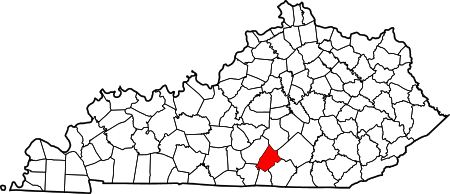
After Russell County school employees were educated about adverse childhood experiences, suspensions dropped by half

Russell County (Wikipedia map)
Suspensions of elementary-school students in Russell County have dropped by half since 2019, when teachers, staff, counselors, and bus drivers began getting intensive training on the effects of childhood trauma on students' mental and physical health, reports Nadia Ramlagan of Public News Service.

"More kids report feeling safe, cared for, and feel they 'belong' at school," Ramlagan reports, citing the Foundation for a Healthy Kentucky, which provided a grant for the project.

The foundation's senior policy and advocacy officer, Amalia Mendoza, told Ramlagan that rural communities face challenges in reducing behavior problems from adverse childhood experiences.

"We're talking about toxic stress, we're not talking about just any adversity," Mendoza said. "There's really that kind of stress that is ongoing, and that can produce changes even in the brain and in the immune system."

According to the Child and Adolescent Health Measurement Initiative, nearly 40% of American children have had at least one adverse childhood experience (ACE): neglect or abuse, living with someone with a drug, alcohol or serious mental-health problem, the death of a parent, or exposure to violence or discrimination in the home or community.

Tracy Aaron, director of health education for the Lake Cumberland District Health Department, told Ramlagan that adverse childhood experiences have been linked to heart disease, stroke, diabetes, cancer and mental-health problems in the 10-county district. "If you look at the data that backs up ACEs," she said, "we have a very high rate of poverty, we have teen pregnancy. Substance use is an issue."

Russell County School Supt. Michael Ford told Ramlagan that schools can't fix family problems, but can remove barriers that affect academic performance and provide spaces where students see de-escalation, self-care and effective problem-solving techniques, and healthy relationships.

Ford said, "We want our kids to be resilient, right? Number one, we want to prevent anything that we can help prevent. Kids, regardless, are going to have ACEs, but ACEs do not have to hold them back."

He said successful strategies in the district include parent and grandparent training on how to build kids' resilience, increasing support for school counselors, and changing discipline policies.

Monday, December 19, 2022

Big, real-world study confirms Covid-19 shots provide much more protection than natural immunity, especially against death

Vaccines give significantly more protection than natural immunity against Covid-19, especially against death, according to one of the first large, real-world studies comparing the two forms of immunity.

The study found that to be true of all age groups in protecting against death, hospitalizations and emergency department visits. "The lower death rate of vaccinated individuals was especially impressive for adults ages 60 years or older," said a press release from the Regenstrief Institute at the Indiana University School of Medicine and the Vanderbilt University Medical Center, which did the study.

“The data raises questions about the wisdom of reliance on natural immunity when safe and effective vaccines are available,” the release said.

Vaccinated people had a higher rate of Covid infection than individuals previously infected (6.7% to 2.9%), but the vaccines “protected against severe disease while natural immunity did not confer the same benefit,” said Dr. Shaun Grannis, the study's corresponding author and vice president for data and analysis at the Regenstrief Institute. 

The release said, "The all-cause death and hospital-admission rates for vaccinated individuals were 37 percent lower than the rates for those with natural immunity acquired from previous Covid infection. The rate of ED visits for all causes was 24 percent lower for vaccinated individuals than for the previously infected."

Gannis said, “This large population study of the entire state of Indiana should encourage individuals everywhere to get themselves and their children vaccinated and not rely on natural immunity. As vaccinated individuals were more likely to actually get Covid than those with natural immunity, the lower death rate of vaccine recipients who develop Covid appears to be due to vaccination and not to a tendency for risk-averse behaviors, such as mask-wearing, hand sanitizing and social distancing.”

The study analyzed data on pairs of vaccine recipients and people with prior infections, matched by age, sex, dates of initial exposure to the vaccines or the virus itself, and Covid risk scores as defined by the U.S. Centers for Disease Control and Prevention. The data came from the Indiana Network for Patient Care, one of the nation’s largest health information exchanges, as well as death reports from the State of Indiana, the release said.

The study is important because previous studies didn't look at emergency-department visits, hospitalizations and mortality for non-Covid reasons, said its first author, Regenstrief Institute Research Scientist Wanzhu Tu, Ph.D. “Our work confirms that mRNA vaccines have kept people out of the ED and the hospital as well as lowered the likelihood of death from any cause. And we saw this pattern in every age group.”

The study, SARS-CoV-2 infection, hospitalization and death in vaccinated and infected individuals in Indiana USA, November 2020 - February 2022, is published in the American Journal of Public Health