This is default featured slide 1 title

Go to Blogger edit html and find these sentences.Now replace these sentences with your own descriptions.This theme is Bloggerized by Lasantha Bandara - Premiumbloggertemplates.com.

This is default featured slide 2 title

Go to Blogger edit html and find these sentences.Now replace these sentences with your own descriptions.This theme is Bloggerized by Lasantha Bandara - Premiumbloggertemplates.com.

This is default featured slide 3 title

Go to Blogger edit html and find these sentences.Now replace these sentences with your own descriptions.This theme is Bloggerized by Lasantha Bandara - Premiumbloggertemplates.com.

This is default featured slide 4 title

Go to Blogger edit html and find these sentences.Now replace these sentences with your own descriptions.This theme is Bloggerized by Lasantha Bandara - Premiumbloggertemplates.com.

This is default featured slide 5 title

Go to Blogger edit html and find these sentences.Now replace these sentences with your own descriptions.This theme is Bloggerized by Lasantha Bandara - Premiumbloggertemplates.com.

Wednesday, May 10, 2023

If you have ever been helped by a nurse, thank them, but especially in May; it's National Nurses Month

Nurses pose in the shape of a heart. (Photo and article via Lexington Herald-Leader)
By Donna Meador
Kentucky Nurses Association

May is National Nurses Month. As the professional organization representing all of Kentucky’s 90,000 nurses, the Kentucky Nurses Association would like to take a few moments of your time to tell you about nurses.

You probably know a nurse or two, may have nurses in your family or friend group, and hopefully have had positive experiences of nursing care. As we have heard many, many times (and year after year in the United States), nurses are the most trusted profession (2022 Gallup poll). But do you really know what we do? Well, it is time for our public to know, straight from the horses’ mouths.

We are portrayed in the media in a variety of ways. Most of those portrayals are angelic, caring, nurturing, even motherly. Occasionally we are portrayed in a more realistic but bent-toward-the-negative fashion. (Think of Nurse Jackie — a popular showtime series featuring a strong-willed but flawed nurse balancing the demands of the emergency room.) The truth is, caring for our patients is extremely important, of course. But what we are doing in the act of “caring” is deeper and often more technical than the public may realize.

▪ When the hospital nurse helps to reposition their patients and adjust pillows, of course it is in part for comfort, but the reality is that he or she is relieving pressure on bony prominences so that they won’t develop a pressure ulcer or “bedsore.”
▪ When the health department nurse asks what seems like 100 questions prior to administering your child’s immunization, it is to assure that it is the correct time for the vaccination, the correct dosage, and to help avoid an allergic reaction, etc.
▪ When the dialysis nurse discusses diet and what is going on at home with the kidney dialysis patient, it may sound like simply making conversation, but they are actually trying to assure the patient has what is needed, is knowledgeable about how to eat and drink to prevent fluid overload, and can avoid serious complications such as falls in the home or food and medication interactions.
▪ When the school nurse interacts with a student, he or she may seem to be just acting pleasant but may be able to identify potential serious problems such as food insecurity in the home, depression, anxiety, and other mental health issues, even situations of abuse.

Today’s Kentucky nurses are leaders, researchers, innovators, educators, administrators, and of course, clinical practitioners. We do our jobs in scrubs, lab coats, military uniforms, or even business suits. We are proud to speak up and advocate for ourselves and our patients, and to work diligently every day to not only care for our Kentucky communities in the traditional ways, but also to improve health, equity, and justice in our healthcare organizations and throughout the commonwealth.

During Nurses Month, the Kentucky Nurses Association will spotlight, honor, and celebrate those in our network who are more than a nurse… but a difference maker in so many lives, each and every day. Join us. Tell a nurse you know that you appreciate them, and then: ask them what they really do!

Donna Meador, MSN, RN, CENP, is immediate past president of the Kentucky Nurses Association. She is a retired registered nurse, and is active in several professional organizations.

Sunday, May 7, 2023

National public-health emergency for Covid-19 ends Thursday but experts warn that another Omicron-like outbreak is still possible

Centers for Disease Control and Prevention maps
To enlarge any image, click on it.
Covid-19 is no longer a global health emergency, and the U.S. public health emergency ends May 11, but the pandemic is not over and the disease remans a threat, the World Health Organization said Friday.

Experts recently warned the White House that "There’s a roughly 20 percent chance during the next two years of an outbreak rivaling the onslaught of illness inflicted by the Omicron variant" of the coronavirus, reports Dan Diamond of The Washington Post. "A forecast from one widely regarded scientist pegged the risk at a more alarming level, suggesting a 40 percent chance of an omicron-like wave." Thousands of people around the world are still dying from the virus every week, the WHO said.

The end of the national public-health emergency means that many broad federal measures, including vaccine mandates, will end. The Centers for Disease Control and Prevention "will have less data to track the spread of Covid and new variants," CNBC reports. "The U.S. has a fragmented health-care system where the authority to decide what disease data gets reported largely rests with states and corporations, not the CDC," but the agency will continue to get "data from the nation's hospitals, a network of voluntary labs and sewage surveillance."

The latest CDC maps for Kentucky show all of the state's counties with a low risk of Covid-19, but another CDC map shows that transmission of the virus is still high or substantial in many counties. Most counties have a moderate level of transmission, indicated in yellow on the map; a few have low levels, indicatd in blue. The latter map is used mainly by hospitals and researchers; health officials say people should take their prevention guidance from the other map, which shows all Kentucky counties in green.

FDA approves first-ever RSV vaccine for people 60 and older

ABC News photo
By Melissa Patrick
Kentucky Health News 

People 60 and older now have access to the first approved vaccine against respiratory syncytial virus. The vaccine, developed by GlaxoSmithKline, is called Arexvy and was approved May 3 by the Food and Drug Administration.

“Today’s approval of the first RSV vaccine is an important public-health achievement to prevent a disease which can be life-threatening and reflects the FDA’s continued commitment to facilitating the development of safe and effective vaccines for use in the United States," Dr. Peter Marks, director of the FDA's Center for Biologies Evaluation and Research, said in a news release. 

The release said the FDA concluded that the vaccine is safe and effective from scientific analysis of data from an ongoing, randomized, placebo-controlled clinical study conducted in the U.S. and other nations among individuals 60 years of age and older. The trial had nearly 25,000 participants.

The study showed that the vaccine reduced the risk of people 60 and older from developing a lower-respiratory-tract infection from RSV by 83 percent, and severe disease by 94%.  

When a person gets RSV, they typically have mild, cold-like symptoms, but for some older adults, it can be deadly, according to the Centers for Disease Control and Prevention. 

Each year, between 60,000 and 160,000 older adults in the U.S. are hospitalized due to an RSV infection and between 6,000 and 10,000 of them die from it, the CDC says. 

Older adults are at more risk of serious complications from RSV because our immune systems weaken as we get older. The CDC Says those with chronic lung or heart disease or weakened immune systems are at the highest risk for severe RSV. 

"With this vaccine, Americans over the age of 60, and particularly those with underlying health conditions like COPD, asthma, or congestive heart failure, will have a vaccine to help protect against potentially serious outcomes from RSV," Dr. John Kennedy, president of the American Medical Group Association, said in a GSK news release

Arexvy will be rolled out ahead of the fall and winter RSV season, Carolyn Y. Johnson of The Washington Post reports in an article that explores the new vaccine's side effects and what's in it.

Johnson notes that the new vaccine does not come from new technology: "This is a protein-based vaccine, similar to ones that are used against other diseases, including a hepatitis B vaccine, a shingles shot and an influenza vaccine. The protein in the vaccine is produced by cells in a laboratory."

Friday, May 5, 2023

Loneliness poses a public-health threat, prompting a rare advisory from the surgeon general, with a plan to rebuild social connections

By Melissa Patrick
Kentucky Health News

The physical and societal harms that come from loneliness are so bad that America's top public-health official has issued a rare advisory with a framework to rebuild social connection and community in the U.S. 

"Loneliness is more than just a bad feeling," Surgeon General Vivek H. Murthy writes in an opinion piece for The New York Times. "When people are socially disconnected, their risk of anxiety and depression increases. So does their risk of heart disease (29%), dementia (50%), and stroke (32%). The increased risk of premature death associated with social disconnection is comparable to smoking daily — and may be even greater than the risk associated with obesity."

Social disconnection was worsened by the pandemic. 

“What Covid did is really pour fuel on a fire that was already burning,” Murthy told Fenit Nirappil of The Washington Post. “I want the entire country to understand how profound a public-health threat loneliness and isolation pose.”

Murthy's opening letter in the public-health advisory, titled Our Epidemic of Loneliness and Isolation, adds, "The mortality impact of being socially disconnected is similar to that caused by smoking up to 15 cigarettes a day . . .  And the harmful consequences of a society that lacks social connection can be felt in our schools, workplaces, and civic organizations, where performance, productivity, and engagement are diminished." 

To further this point, the advisory says, "Data across 148 studies, with an average of 7.5 years of follow-up, suggest that social connection increases the odds of survival by 50%." 

In the Times, Murthy tells the story of his own experience with loneliness after his first term as surgeon general and how, with the help of others, he found his way out of it. Research shows he was not alone in this feeling, he reports: "About one out of every two Americans is experiencing measurable levels of loneliness. . . . Its invisibility is part of what makes it so insidious." 

Murthy goes on to say that loneliness and isolation have led us to a place where we "are less invested in one another, we are more susceptible to polarization and less able to pull together to face the challenges that we cannot solve alone." And this, he says, "has fueled other problems that are killing us and threaten to rip our country apart." 

For all of these reasons, Murthy writes, "rebuilding social connection must be a top public-health priority in our nation." To do this, he offers three key suggestions in the op-ed, which are outlined in greater depth in the 68-page advisory. 

First, Murthy says we must strengthen our social infrastructure, such as school-based programs that teach children about building healthy relationships and workplace design that fosters social connection.

Second, we must figure out how to create space in our lives without our electronic devices so that we can be more present with each other, with a commitment to promote conversation that amplifies understanding. 

Third, we need to take steps to rebuild our connections to each other, reaching out to people we care about, talking to our neighbors, checking in with co-workers who may be having a hard time, and seeking opportunities to serve.
Murthy has long advocated treating loneliness as a public-health issue wrote a 2020 book, Together: The Healing Power of Human Connection in a Sometimes Lonely World.

Research cited in the advisory shows that nationally, social connection decreased between 2003 and 2020 as time alone increased: Isolation increased by 24 hours per month and social engagement with friends dropped 20 hours per month.

Research also shows that loneliness and isolation are most prevalent in people with poor physical or mental health, disabilities, struggling financially or living alone, says the advisory. It adds that younger and older populations struggle the most. 

"For example, while the highest rates of social isolation are found among older adults, young adults are almost twice as likely to report feeling lonely than those over 65," it says. 

The advisory provides a national strategy to advance social connection that involves six pillars and the report goes on to lay out a detailed plan for how to support them. They include: strengthening social infrastructure in local communities; enacting pro-connection public policies; mobilizing the health sector; reforming digital environments; deepening our knowledge; and building a culture of connection. 

Graphic from Our Epidemic of Loneliness and Isolation public health advisory 

The report says, "We can choose, in short, to take the core values that make us strong—love, kindness, respect, service, and commitment to one another—and reflect them in the world we build for ourselves and our children. This strategy shows us how to create the connected lives and the connected world we need."

Murthy talked to Christina Caron of the Times about how to build meaningful social connections in an increasingly lonely world. He offered five tips: 
  • Reconnect with people: "To get started, take 15 minutes each day to contact a friend or a relative. Put a reminder in your calendar, if needed, so that it remains a priority. Your relationships cannot thrive unless they are nurtured," she writes
  • Minimize distractions: For a more satisfying quality time, put the devices down and give your full attention.“Focus on the conversation,” Murthy told Caron. “Listening is as important as what we say.”
  • When people call, pick up the phone: Even if you are busy, he said. Pick it up, make a time to talk later, and do it. "That 10 seconds feels so much better than going back and forth on text," he said. 
  • Serve others: Studies show that volunteering can ease feelings of loneliness and broaden our social networks, she writes. “When we help other people we establish an experience or a connection with them — but we also remind ourselves of the value that we bring to the world,” he told her. 
  • Get help: Murthy said to tell someone if you are struggling with loneliness, whether that be a relative, a friend, a counselor or a health care provider. And, if you are having thoughts of harming yourself, call the 988 crisis hotline.

Young Ky. woman battles two extremely rare health conditions

Brayli Steberl (Photo from GoFundMe page)
A young Kentucky woman is facing an uphill battle to fight two extremely rare health conditions, one affecting her blood and the other her liver,  Phil Pendleton reports for Lexington's WKYT-TV.

Pendleton reports that Brayli Steberl, a 21-year-old student at Campbellsville University, was sick for four years before they figured out that she had a blood disorder called paroxysmal nocturnal hemoglobinuria, which causes part of her own blood to attack her, and Budd-Chiari syndrome, a liver condition that causes the veins in her liver to be blocked by blood clots. 

Both conditions are extremely rare, and it’s even more rare to have both together -- and, they are also extremely expensive to fight. Steberl has a  GoFundMe page to help her pay medical costs. 

Steberl's mother, Kathy Long, told Pendleton that treatments cost hundreds of thousands of dollars, and insurance co-payments cost $80,000. She has seen doctors in Kentucky, Ohio and Tennessee and will likely face more travel in the future. 

Long also told Pendleton that her daughter's faith is so strong. She said, “Her desire is to just truly serve the Lord. She said this isn’t going to stop me. It is going to be part of the journey." 

Wednesday, May 3, 2023

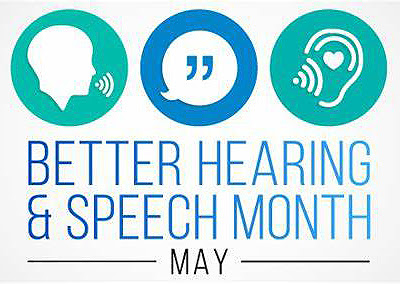
May is Better Hearing and Speech Month; state says 700,000 Kentuckians have some degree of hearing loss; here are signs

From a Commonwealth of Kentucky press release

With approximately 15% of American adults reporting difficulty hearing, state officials are encouraging people to learn the signs of hearing loss—and to seek care during Better Hearing and Speech Month in May.

“We know that more than 700,000 Kentuckians of all ages are experiencing some degree of hearing loss. We encourage people to have a professional check their hearing and also to protect their hearing from loud noises,” Gov. Andy Beshear said.

Signs of hearing loss in adults include the following:
  • Difficulty following conversations
  • Difficulty hearing in noisy environments
  • Hearing ringing, roaring or beeping in one or both ears
  • Failure to respond to spoken words
  • Muffled hearing
  • Constant frustration hearing speech and other sounds
  • Avoidance of conversation
“Our hearing is key to so many aspects of our lives, but it’s something that many people undervalue until they are having severe hearing difficulties,” said Virginia Moore, executive director of the the Kentucky Commission on the Deaf and Hard of Hearing. “Even then, some people wait years to receive treatment, if ever. This is despite the fact that audiologists can help people in many different ways.

“Hearing loss is much more than a simple nuisance. Left unaddressed, it can affect us in a variety of ways, including increased risk for physical danger such as falling or missing warning signals like a fire alarm; mental health problems, including social isolation and depression; and cognitive decline, including earlier onset of dementia. Our personal relationships, career success and health care costs can be affected as well.”

As a first step, Moore urges anyone concerned about their own hearing or that of a loved one to seek an evaluation from a certified audiologist. Private insurance, Medicaid and Medicare generally cover such evaluations. People can take this step even if they think they cannot afford hearing aids or other hearing services. Audiologists can advise people on ways to make hearing aids more affordable. In addition, various organizations offer financial assistance.

Aside from hearing aids, audiologists can identify other ways to improve a person’s listening and communication skills. They also can help families support loved ones affected by hearing loss.

If you are experiencing any of the signs above or if you think you have hearing loss, see your doctor or a licensed audiologist to assess the degree of your hearing loss, treat it and develop a plan to prevent further loss. There are several assistive technologies available through KCDHH’s Telecommunications Access Program, which can help you stay connected to emergency information and health-care providers.

For more information, contact Virginia Moore at 502-573-2604 or virginia.moore@ky.gov. You also may visit the KCDHH website.


Monday, May 1, 2023

All-day Immunization Summit to be held in Lexington May 10

For a larger version of this poster, click on it.
By Melissa Patrick
Kentucky Health News

The Kentucky Rural Health Association is sponsoring an Immunization Summit May 10 at the Embassy Suites in Lexington. 

The keynote speaker will be Ruth Carrico, a senior research scientist with the Norton Infectious Diseases Institute, who will speak about promoting public confidence in vaccines. 

The conference will touch on a number of topics, including information on the state of immunizations in Kentucky, the role of mobile units in vaccination, barriers to immunization and messages to overcome them, attitudes about immunization research, and more. 

The event is scheduled from 8 a.m. to 5 p.m. May 10 at the Embassy Suites, 1801 Newtown Pike.  Click here to register and click here for the full agenda. 

KRHA has formed the Immunize Kentucky Coalition, which says its vision is to "work to increase immunization rates and prevent disease by fostering a partnership of Kentucky parents, patients, businesses, healthcare organizations, and others by promoting health equity that support the delivery of safe and effective immunizations through stronger community buy-in and public health education." Click here to learn more about the coalition.

We want to work to increase immunization rates and prevent disease by fostering a partnership of Kentucky parents, patients, businesses, healthcare organizations, and others by promoting health equity that support the delivery of safe and effective immunizations through stronger community buy-in and public health education. This mission drives the continued success of IKC.

We want to work to increase immunization rates and prevent disease by fostering a partnership of Kentucky parents, patients, businesses, healthcare organizations, and others by promoting health equity that support the delivery of safe and effective immunizations through stronger community buy-in and public health education. This mission drives the continued success of IKC.