This is default featured slide 1 title

Go to Blogger edit html and find these sentences.Now replace these sentences with your own descriptions.This theme is Bloggerized by Lasantha Bandara - Premiumbloggertemplates.com.

This is default featured slide 2 title

Go to Blogger edit html and find these sentences.Now replace these sentences with your own descriptions.This theme is Bloggerized by Lasantha Bandara - Premiumbloggertemplates.com.

This is default featured slide 3 title

Go to Blogger edit html and find these sentences.Now replace these sentences with your own descriptions.This theme is Bloggerized by Lasantha Bandara - Premiumbloggertemplates.com.

This is default featured slide 4 title

Go to Blogger edit html and find these sentences.Now replace these sentences with your own descriptions.This theme is Bloggerized by Lasantha Bandara - Premiumbloggertemplates.com.

This is default featured slide 5 title

Go to Blogger edit html and find these sentences.Now replace these sentences with your own descriptions.This theme is Bloggerized by Lasantha Bandara - Premiumbloggertemplates.com.

Tuesday, July 19, 2022

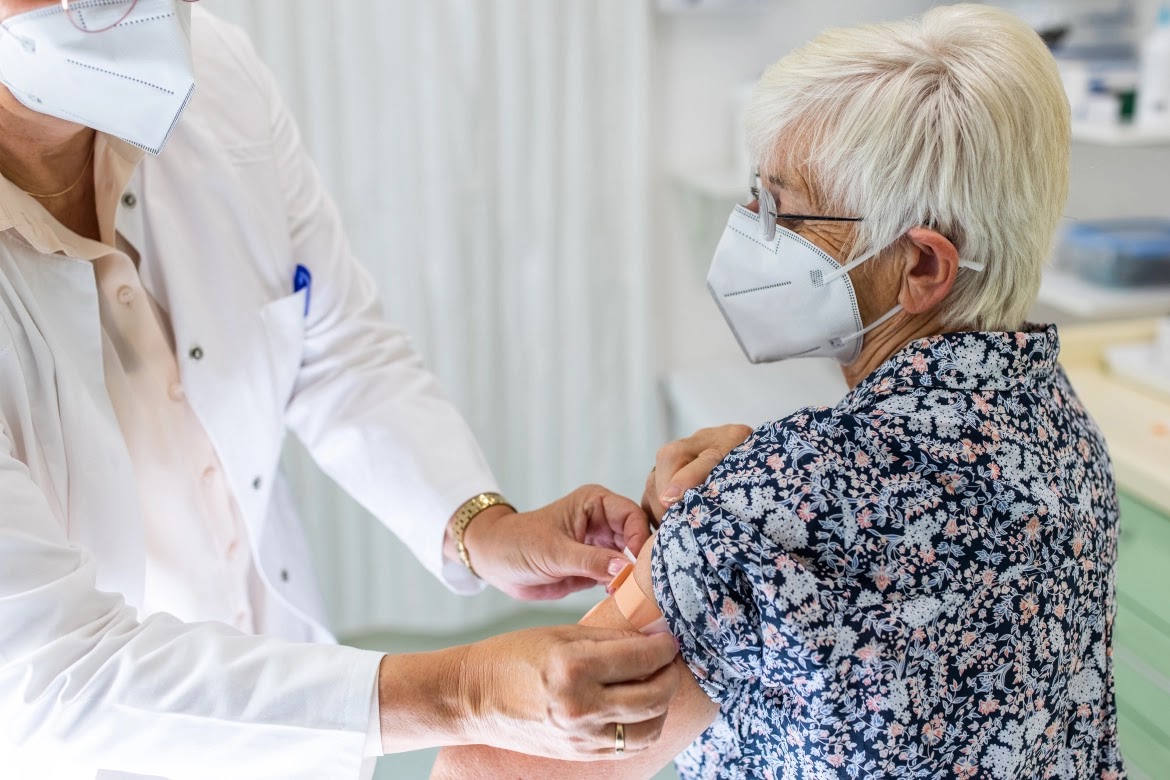
Get a booster now or wait for new BA.4/5 version? Depends on your circumstances, and experts' varying opinions confuse people

Getty Images photo via Kaiser Health News
By Sam Whitehead
and Arthur Allen
Kaiser Health News

Gwyneth Paige didn’t want to get vaccinated against Covid-19 at first. With her health issues — hypertension, fibromyalgia, asthma — she wanted to see how other people fared after the shots. Then her mother got colon cancer.

“At that point, I didn’t care if the vaccine killed me,” she said. “To be with my mother throughout her journey, I had to have the vaccination.”

Paige, who is 56 and lives in Detroit, has received three doses. That leaves her one booster short of federal health recommendations.

Like Paige, who said she doesn’t currently plan to get another booster, some Americans seem comfortable with the protection of three shots. But others may wonder what to do: Boost again now with one of the original vaccines, or wait months for promised new formulations tailored to the latest, highly contagious omicron subvariants, BA.4 and BA.5?

The rapidly mutating virus has created a conundrum for the public and a communications challenge for health officials.

“What we’re seeing now is a little bit of an information void that is not helping people make the right decision,” said Dr. Carlos del Rio, a professor of infectious diseases at Emory University in Atlanta.

Del Rio said the public isn’t hearing enough about vaccines’ value in preventing severe disease, even if they don’t stop all infections. Each new Covid-19 variant also forces health officials to tweak their messaging, del Rio said, which can add to public mistrust.

About 70 percent of Americans age 50 and older who got a first booster shot — and nearly as many of those 65 and older — haven’t received their second Covid booster dose, according to the Centers for Disease Control and Prevention. The agency currently recommends two booster shots after a primary vaccine series for adults 50 and older and for younger people with compromised immune systems. Last week, multiple news outlets reported that the Biden administration was working on a plan to allow all adults to get second Covid boosters.

Officials are worried about the surge of BA.4 and BA.5, which spread easily and can escape immune protection from vaccination or prior infection. A recent study published in Nature found BA.5 was four times as resistant to the currently available messenger-RNA vaccines as earlier omicron subvariants.

Although some Americans are pondering when, or whether, to get their second boosters, many people tuned out the pandemic long ago, putting them at risk during the current wave, experts said.

Dr. Georges Benjamin, executive director of the American Public Health Association, said he doesn’t expect to see the public’s level of interest in vaccination change much, even as new boosters are released and eligibility expands. Parts of the country with high vaccine coverage will remain relatively insulated from new variants that emerge, he said, while regions with low vaccine acceptance could be set for a “rude awakening.”

Kentucky ranks 36th among the states in the percentage of its population that is fully vaccinated (58%), and 31st in the share of fully vaccinated population that has has at least one booster dose (45.6%). Nationally, 67% are fully vaccinated and 48% have had a booster.

Experts' views vary

Consistent messaging has been complicated by different views voiced by leading vaccine scientists. Although physicians like del Rio and Dr. Peter Hotez of the Baylor College of Medicine in Texas see the value in getting a second booster, Dr. Paul Offit, a member of the FDA’s vaccine advisory committee, is skeptical it’s needed by anyone but seniors and people who are immunocompromised.

“When experts have different views based on the same science, why are we surprised that getting the message right is confusing?” said Dr. Bruce Gellin, chief of global public-health strategy at the Rockefeller Foundation and a colleague of Offit on the FDA panel.

Janet Perrin, 70, of Houston, illustrates the messaging problem. Perrin said she  hasn’t gotten her second booster for scheduling and convenience reasons, and said she’ll look for information about a variant-targeted dose from sources she trusts on social media. “I haven’t found a consistent guiding voice from the CDC,” she said, and the agency’s statements sound like “a political word salad.”

On July 12, the Biden administration released its plan to manage the BA.5 subvariant, which it warned would have the greatest impact in the parts of the country with lower vaccine coverage. The strategy includes making it easier for people to access testing, vaccines and boosters, and antiviral treatments.

During the first White House Covid-19 briefing in nearly three weeks, the message from top federal health officials was clear: Don’t wait for an Omicron-tailored shot. “There are many people who are at high risk right now, and waiting until October, November for their boost — when in fact their risk is in the moment — is not a good plan,” said Dr. Rochelle Walensky, head of the CDC.

With worries about the BA.5 subvariant growing, the FDA recommended June 30 that drug makers Pfizer-BioNTech and Moderna get to work producing a new bivalent vaccine that combines the current version with a formulation that targets the new strains.

The companies say they can get the U.S. millions of doses of the reformulated shots in October. Experts think that deadline could slip by a few months given the unexpected hitches that plague vaccine manufacturing.

Dr. Kathryn Edwards, scientific director of vaccine research at Vanderbilt University in Nashville, asked, “What’s the benefit of getting another booster now when what will be coming out in the fall is a bivalent vaccine and you will be getting BA.4/5, which is currently circulating? Although whether it will be circulating in the fall is another question.”

The FDA on July 13 authorized a fourth Covid-19 vaccine, made by Novavax, but only for people who haven’t been vaccinated yet. Many scientists thought the Novavax shot could be an effective booster for people previously vaccinated with mRNA shots from Pfizer-BioNTech and Moderna because its unique design could broaden the immune response to coronaviruses. Unfortunately, few studies have assessed mix-and-match vaccination approaches, said Gellin, of the Rockefeller Foundation.

Edwards and her husband got Covid-19 in January. She received a second booster last month, but only because she thought it might be required for a Canadian business trip. Otherwise, she said, she felt a fourth shot was kind of a waste, though not particularly risky. She told her husband — a healthy septuagenarian — to wait for the BA.4/5 version.

People at very high risk for Covid complications might want to go ahead and get a fourth dose, Edwards said, with the hope that it will temporarily prevent severe disease “while you wait for BA.4/5.”

The omicron vaccines will contain components that target the original strain of the virus because the first vaccine formulations are known to prevent serious illness and death even in people infected with omicron.

Those components will also help keep the earlier strains of the virus in check, said Dr. David Brett-Major, an infectious disease specialist at the University of Nebraska. That’s important, he said, because too much tailoring of vaccines to fight emerging variants could allow older strains of the coronavirus to resurface.

Brett-Major said messages about the value of the tailored shots will need to come from trusted, local sources — not just top federal health officials.

“Access happens locally,” he said. “If your local systems are not messaging and promoting and enabling access, it’s really problematic.”

Even scientists are at a bit of a loss for how to effectively adapt to an ever-changing virus.

“Nothing is simple with Covid, is it? It’s just whack-a-mole,” said Edwards. “This morning I read about a new variant in India. Maybe it’ll be a nothingburger, but — who knows? — maybe something big, and then we’ll wonder, ‘Why did we change the vaccine strain to BA.4/5?’

Kaiser Health News is a national newsroom that produces in-depth journalism about health issues. Along with policy analysis and polling, it is one of the three major operating programs at the Kaiser Family Foundation, an endowed nonprofit organization providing information on health issues.

Monday, July 18, 2022

Kentucky, like most of U.S., sees increases in Covid-19 cases (up 17% last week) and hospitalizations (up 21%); deaths go down

Ky. Dept. for Public Health map, adapted by Ky. Health News; for a larger version, click on it.
By Melissa Patrick
Kentucky Health News

This week's weekly pandemic report for Kentucky shows that Covid-19 hospitalizations increased 21 percent last week, continuing a trend of what Gov. Andy Beshear earlier called a "legitimate increase" in hospital cases that prompted him Thursday to urge Kentuckians to "be wary" of the coronavirus. 

The figures for the Monday-Sunday reporting period showed Kentucky hospitals with 587 Covid-19 patients on Sunday, up from 483 a week earlier. The number of Covid patients in intensive care rose by six, to 78 (a 17% increase), but the number on mechanical ventilation dropped to 18 from 28. 

The Monday-through-Sunday report showed 12,798 new cases, an average of 1,828 per day. That's 17% higher than the week before, when daily new cases averaged 1,564.

The state attributed 49 more deaths to Covid-19 last week, an average of 7 per day.  This follows a week where the state saw a big increase in Covid-19 deaths, when it reported 62 Covid-19 deaths, or 8.86 per day. The state's pandemic death toll is 16,293. 

The share of Kentuckians testing positive for the virus increased again, to 17.7%. That's up from 16.96% in the prior report. However, this number does not capture a large number of people who have done home tests or who are walking around with the virus but have no symptoms. National health experts estimate that only 10% to 40% of cases are being discovered. 

The statewide case-incidence rate rose to 37.75 cases per 100,000 population, the highest since Feb. 24 and up from 33.98 in the previous week. Wolfe County, at 75.8 cases per 100,000, ranks first, followed by Perry, 72.1; Leslie, 66.5; Floyd, 59.4; Powell, 57.8; Boyd, 56.6; Greenup, 54.1; Letcher, 53.7; Muhlenberg, 53.6; and Grayson, 53.

The New York Times ranks Kentucky's case-incidence rate eighth among the states, with a 45% increase in cases in the last 14 days. 

"Following a long period in which new reports of cases were relatively consistent, the number of cases announced in the U.S. each day is again on the rise," the Times reports. "The daily case average grew to more than 129,000 on Tuesday, and cases are rising in more than 40 states. Since cases have always been an undercount, it is likely that the true number of cases is far higher — particularly since test- positivity rates are also increasing sharply nationwide." Also, Covid-19 hospitalizations have risen 17% since July 1.

Sunday, July 17, 2022

In abortion ruling's wake, Senate GOP caucus chair says Ky. must see to adoption and human services, protect jobs in pregnancy

Senate Majority Caucus Chair Julie Raque Adams (LRC photo)
By Al Cross
Kentucky Health News

The U.S. Supreme Court's reversal of its Roe v. Wade decision means more work for the Kentucky General Assembly, a leading state senator said in a Lexington television interview broadcast Sunday.

"That issue will probably take up a lot of space in this upcoming session," Majority Caucus Chair Julie Raque Adams, a Louisville Republican, told Bill Bryant on WKYT-TV's "Kentucky Newsmakers."

"It's important for the legislature to make sure we have adequate resources for adoption care," that the state is "fully implementing" the two-year-old Pregnancy Protection Act for workers and "make sure that the human services end of things are funded so we are helping families and helping women," she said.

The extent of activity on the issue will likely depend on what the courts do between now and convening of the session in January, Raque Adams said: "We'll probably take our lead from the courts."

A Louisville judge is considering a lawsuit arguing that the state constitution's implied grant of privacy rights, which the state Supreme Court extended to strike down a law banning sexual relations between people of the same sex, creates a privacy right to abortion. Whatever his ruling, an appeal is certain.

Not so certain is whether, during appeal, courts will continue to block state laws that ban abortion after the sixth week of pregnancy and ban all abortions except those needed to save the woman's life or keep her from becoming disabled. The latter law was written to take effect if Roe v. Wade was overturned. 

Raque Adams noted that the Nov. 8 ballot includes a constitutional amendment that would negate the lawsuit's argument by saying that the state constitution does not create a right to abortion or government funding of it. She said she is telling people on both sides of the issue that debating the amendment is "a great way" for people to engage with the issue.

Democratic Gov. Andy Beshear has said he opposes the amendment, calling it "extreme" because it has no exceptions for rape or incest. Asked if she supports the amendment, Raque Adams did not answer directly: "Yes, I voted to put that on the ballot."

Asked if the legislature might try to ban abortion medication, the most common method of abortion, or restrict Kentuckians' travel to states with less restrictive abortion laws, Raque Adams said she had not heard such legislation mentioned for Kentucky.

Judge lifts injunction against law banning abortion in Ky. after 15 weeks; only clinic doing later abortions had suspended them

"A Kentucky law banning abortions after 15 weeks of pregnancy may now be enforced while a legal challenge continues to a state law banning all abortions in the state," Deborah Yetter of The Courier Journal reports. "For now, abortions remain legal in Kentucky for patients with pregnancies under 15 weeks, under a different court ruling."

The 15-week rule is part of a broad anti-abortion bill the Kentucky General Assembly passed this year. U.S. District Judge Rebecca Grady Jennings had blocked that part of the bill, but she said in an order Thursday there was no reason to continue that because the U.S. Supreme Court has returned abortion policy to the states with its June 24 overturn of its 1973 Roe v. Wade decision.

Jennings noted that neither of the state's two abortion clinics objected to its reinstatement. Yetter notes, "Planned Parenthood provides abortions only through 14 weeks of pregnancy," and EMW Women's Surgical Center "had suspended providing abortions beyond 15 weeks as a precaution" following the June 24 decision.

An earlier state law banned abortions after 22 weeks, the approximate limit of the right to an abortion created by the 1973 decision, based on the ability of a fetus to survive outside the womb.

Other parts of the 2022 law, passed in House Bill 3, "including heavy regulation of medication to induce abortions, new restrictions for girls under 18 seeking abortions and extensive new reporting requirements for physicians who provide abortions services," remain blocked by the injunction, Yetter notes.

"Lawyers for Planned Parenthood and the American Civil Liberties Union of Kentucky, which represents EMW, said the additional requirements of HB 3 are so complex and far-reaching that state officials and health providers haven't had sufficient time to develop new forms and procedures required under the law," Yetter writes. "Jennings said she will reserve ruling on whether to allow the rest of HB 3 to be enforced until the lawyers for all sides can provide more information."

HB 3 also included a provision, triggered by the June 24 decision, to ban abortions in Kentucky except in cases where the woman faces the possibility of death or a disabling injury. That has been blocked by an injunction from Jefferson Circuit Judge Mitch Perry, in a lawsuit by the abortion clinics that cites privacy rights created by the Kentucky Constitution. 

Perry has given the parties until Monday, July 18, to file their written arguments and has said he will rule "as soon as possible." State Attorney General Daniel Cameron is defending the law.

Saturday, July 16, 2022

Next medical-cannabis town hall set Tuesday, July 19, in Frankfort

By Melissa Patrick
Kentucky Health News

Gov. Andy Beshear's Medical Cannabis Advisory Committee will hold its next town hall meeting on Tuesday, July 19, in Frankfort. 

The meeting will be held at the Kentucky Transportation Cabinet Conference Center-C105 Auditorium, 200 Mero Street, from 5:30 to 7 p.m. EDT. Attendees are encouraged to register, but registration is not required.

Beshear said he created the advisory committee to help advise him on providing access to medical cannabis for Kentuckians suffering from chronic pain and other medical conditions.

"What we're doing these town halls for is, everybody deserves to be a part," Beshear said at his weekly press conference. "Over 90 percent of Kentuckians have suggested that they are for this, and the legislature isn't listening to them at all. So we're trying to give them a voice in the ultimate decision-making that's happening." 

Asked for an update on his effort to find a way to bring medical marijuana to Kentucky by executive action, Beshear said his team is still researching this issue but he expects results that will help some people.  

"I'm more than confident that we are going to be able to move the needle, and we are going to be able to move ahead on this topic, and that some actions are going to be taken," he said, later adding, "I expect that there will be some results that in the very least will provide some relief to a number of Kentuckians who deserve it." 

After the Frankfort meeting, the next one will be Monday, July 25, at Hopkinsville Community College from 5:30 to 7 p.m. CDT. For a list of meetings visit medicalcannabis.ky.gov. The web page has a portal to submit personal stories and experiences. Videos of the three previous town halls can be found on the page and viewed on the Public Protection Cabinet's You-Tube cannel. 

Friday, July 15, 2022

Handshakes are back, but with a note of caution for Covid-19

TheConversation.com
After a long hiatus of virtual meetings, business travel, in-person conferences and corporate retreats are becoming the norm again – and so is handshaking. 

"At no point during meetings or events that I’ve attended in L.A., Austin, D.C. or Cannes, France, over the past two months did I hesitate to reach out and shake hands — nor did I sense hesitation from anyone else," Hope King reports for Axios. 

King reflects on the importance of the age-old custom of greeting and communication, and notes the desire of people to get back to normal routines. Her bottom line: "We can't replicate what we learn from human touch." 

This reflection comes at a time when Covid-19 is surging across the nation and in Kentucky with a variant that is highly infectious, but is not nearly as deadly as recent strains of the virus. However, as Gov. Andy Beshear said at his weekly press conference on Thursday, "It still is harming and taking lives and we need to be wary of that." 

In this spirit, White House officials said President Joe Biden planned to limit his handshaking while in the Middle East this week and that the precaution was put in place by Biden’s doctor following a rise in cases of Covid-19 variants,  Alexander Ward reports for Politico, which says Biden has been seen both fist-bumping and shaking hands on the trip so far. 

In June 2021, the Cleveland Clinic declared it is safe to shake hands if you've been vaccinated for Covid-19, but it's also important to only do so if you're comfortable with it. That said, it also says that a fist bump would be the safer option, since it has been proven to transmit fewer germs than the traditional handshake. 

The clinic also encourages people to be smart about who they shake hands with – pandemic or no pandemic. For example, if a person is coughing or showing signs of being ill, take a pass. 

Also, the rules of good hand hygiene always apply, which means washing your hands regularly for 20 seconds with soap and water. And the clinic notes that hand sanitizer is also an option. 

Thursday, July 14, 2022

CDC says 61 Kentucky counties are at high risk of Covid-19 and 45 are at medium risk; Beshear says 'be wary' of coronavirus

By Melissa Patrick
Kentucky Health News

All but 14 of Kentucky's 120 counties have an elevated risk of coronavirus on the latest federal risk map, and Gov. Andy Beshear cautioned that the transmission rates are likely high in those counties too.

"We know there is a lot more Covid that is out there, and people need to really think about what steps they want to take, or the repercussions of steps that they might not take," Beshear said at his weekly news conference. And while the latest dominant variant isn't nearly as deadly as recent ones, "It still is harming and taking lives," he said, "and we need to be wary of that."

Centers for Disease Control and Prevention map, adapted
This week's Centers for Disease Control and Prevention risk map says Kentucky has 61 orange counties, indicating a high level of risk. That's a big increase from the 37 on last week's map. Most of this week's orange counties are in the east and west, with a string of them down the middle of the state. 

Forty-five counties are yellow, indicating a medium level of risk. Last week 44 were yellow. The rankings are based on new coronavirus cases, hospital admissions and hospital capacity. 

In orange counties, state guidelines call for wearing masks in indoor public spaces, limiting in-person gatherings, limiting the size of gatherings, and social distancing.

People in yellow counties who are immunocompromised, or at high risk for severe illness from the virus, should talk to a health-care provider about whether they need to wear a mask or take other precautions, the CDC says.

Centers for Disease Control and Prevention map
The CDC also issues a transmission map, which shows that all but four counties have a high level of coronavirus transmission, shown in red. State officials say the risk map, on which the highest value is represented by orange, is the map that people should use to guide their preventive measures against Covid-19.

The state's weekly pandemic report, released Monday, showed Kentucky had an average of 1,564 new cases a day last week, 14.3 percent more than the week before. The positive-test rate increased to 16.96% and Covid-19 deaths jumped to 62 from 38 the prior week.

 Hospitalizations, while still low, are on what Beshear called a "legitimate increase," increasing enough to prompt him to urge caution for the first time in a long while.  

"People need to be wary," the governor said. "And certainly, if people are in the groups that this virus harms the most, they should definitely think about taking extra steps." 

Nine out of 10 Kentuckians under 60 who have died from Covid-19 in the past year were unvaccinated, and two-thirds of Kentuckians over 60 who died from Covid-19 in the past year were unvaccinated, Health Commissioner Steven Stack said. 

"The risk reduction from death and severe illness and hospitalization is profound," he said. 

Speaking to how contagious the Omicron BA.5 variant is, Stack said earlier variants resulted in one person possibly infecting three or more people, while one person with BA.5 could infect 18 or more people. The good news is that even as BA.5 causes more infections, it does not appear to cause increased hospitalizations or deaths. 

Stack said we are "solidly at a phase in the pandemic" where individuals who are at higher risk from the virus -- such as people 50 and older and "certainly over 60," anyone with major medical problems or compromised immune systems -- need to take extra precautions, which involves getting that second booster.  "If you're generally healthy," he said. "I think you might be OK to see what happens in the fall," when the FDA is expected to approve a new version of the vaccine with broader protection. 

"We have all got to take this seriously," Stack said. "That doesn't mean we don't go on with life, but this is this is here to stay, folks. So I think we all still should continue to treat it with a healthy dose of respect."

Stack praised Toyota Motor Manufacturing's decision to require masks in its Georgetown factory, noting that while this variant isn't as dangerous as prior ones, it is highly contagious and causing people to get sick and stay home from work, potentially impacting a whole operation. 

"I think this is important . . . and encourage other employers to consider what's appropriate in your setting," Stack said. 

New vaccine approved: The U.S. Food and Drug Administration approved emergency use of a new Covid-19 vaccine called Novavax on Wednesday. The vaccine that is made with more traditional technologies than the Pfizer and Moderna mRNA vaccines. 

"In the next few weeks or month, you'll have another option if for some reason the two mRNA vaccines were not appealing to you . . . and I would encourage you to be open to it," Stack said. 

Vaccines and tests could run short: White House Coronavirus Response Coordinator Ashish Jha told the Bipartisan Policy Center July 12 that the nation won’t have enough Covid-19 vaccines and tests for this fall and winter, since Congress is refusing to fund such efforts, Michelle M. Stein reports for Inside Health Policy.

This news comes as the administration works on strategies to be ready for the pandemic's next phase, including having stockpiles of tests, personal protective equipment and updated vaccines, Stein reports. 

“That job has become much, much harder . . . because Congress has decided that they don’t want to fund that kind of effort,” Jha said. “And so we are now trying to put together resources to make sure that we have at least some of the new vaccines, that we have at least some tests going into the fall. We are not going to have enough.”

Stack said this lack of federal funding is already limiting access to monoclonal antibodies for Covid-19, a treatment that acts much like your own antibodies and can stop symptoms of the disease from getting worse and may prevent hospitalization caused by worsening symptoms.

"I'll make it very concrete," Stack said. "We're gonna run out of monoclonal antibodies here in the next few weeks, and the monoclonal sites are going to shut. There won't be any more monoclonal antibodies in Kentucky or any state in the next few weeks because the federal government has no more money to purchase them."

Hopefully, he said, this won't happen with Covid-19 vaccines, but "If Congress doesn't grant more money to the administration, the administration has said unequivocally, they will unfortunately not have the resources and then that means we won't be able to just tell every citizen in every Kentucky and you can just go and at no cost to yourself get a vaccine." 

That would mean your insurance would have to pay for it, or you would pay for it out of your pocket, he said. Further, pharmaceutical companies may not innovate as quickly without government support. 

"So I hope they'll take action," he said. But for right now, "Vaccine is abundant. So if you are eligible, please go out and get it."